Popular Keywords



About TrendForce News
TrendForce News operates independently from our research team, curating key semiconductor and tech updates to support timely, informed decisions.
[News] Intel Reportedly Eyes Retired TSMC Veteran Wei-Jen Lo, Advanced Node Pioneer, to Lead R&D

As the race for sub-2nm dominance intensifies among foundries, Intel is reportedly targeting a recently retired TSMC executive to spearhead its key R&D efforts. According to Liberty Times, just three months after retiring, former TSMC Senior Vice President of Corporate Strategy Development Wei-Jen Lo is rumored to be joining Intel to take on the role.
The rumor is particularly sensitive given Lo’s 21 years at TSMC, where he held senior operational and R&D roles and gained deep knowledge of the company’s trade secrets. Liberty Times reports that TSMC executives are reportedly aware of the news.
If confirmed, the move could have significant implications for TSMC and the broader Taiwanese semiconductor industry, especially as Intel aggressively expands its foundry business with support from Washington and backing from tech giants like NVIDIA and SoftBank, the report adds.
Lo’s Importance to TSMC
As per Commercial Times, under Lo’s leadership, TSMC’s technology team secured more than 1,500 patents, including around 1,000 in the United States, laying a solid foundation for the company’s advanced process and R&D capabilities.
He is also said to have enjoyed the deep trust of TSMC founder Morris Chang. According to CommonWealth Magazine, when Lo retired this past July, he was TSMC’s longest-serving executive. Although the company’s official retirement age is 67—with extensions requiring annual board approval—Lo remained in his role until 75, two years senior to CEO C.C. Wei, the report adds.
CommonWealth Magazine, citing industry sources, describes him as the most enigmatic of TSMC’s veteran leaders, noting that he maintained an exceptionally low profile and always stayed in the background, who wouldn’t even put his name on academic papers. However, as per ITRI, over more than two decades at TSMC, he led teams in overcoming technical bottlenecks, playing a pivotal role in driving EUV lithography and the mass production of advanced nodes including 5nm, 3nm, and 2nm.
Speculation and Doubts
Regarding the latest rumor, Liberty Times points out that Lo previously worked at Intel and that his leadership style was shaped by his time there. However, industry insiders cited by the report say it is unlikely he would join Intel again, given TSMC’s non-compete rules, Intel’s status as a direct competitor, Lo’s advanced age, health considerations, and his long-standing loyalty to TSMC founder Morris Chang.
On the other hand, some industry observers warn that Lo, a U.S. citizen, would be difficult for TSMC to restrict, even with non-compete clauses. Yet the report adds that foundry is a team effort, and it remains uncertain whether he could significantly boost Intel’s mass production or yields. Intel may also be leveraging the prestige of a former TSMC veteran as part of a broader foundry strategy, the report notes.
Intel’s 18A has just entered mass production with its in-house processor Panther Lake. However, as TweakTown reports, the graphics tile (GPU) is still manufactured by TSMC on its N3E process, while the SoC/I/O tile is produced using TSMC’s N6 process.
Read more
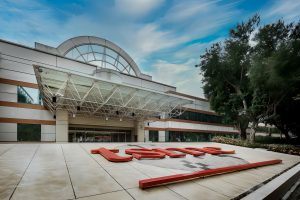
(Photo credit: TSMC)
Please note that this article cites information from Liberty Times, Commercial Times, CommonWealth Magazine, ITRI and TweakTown.