Popular Keywords



About TrendForce News
TrendForce News operates independently from our research team, curating key semiconductor and tech updates to support timely, informed decisions.
[News] What to Expect from Intel Panther Lake, Featuring 18A and Reportedly TSMC N3E/N6 Processes
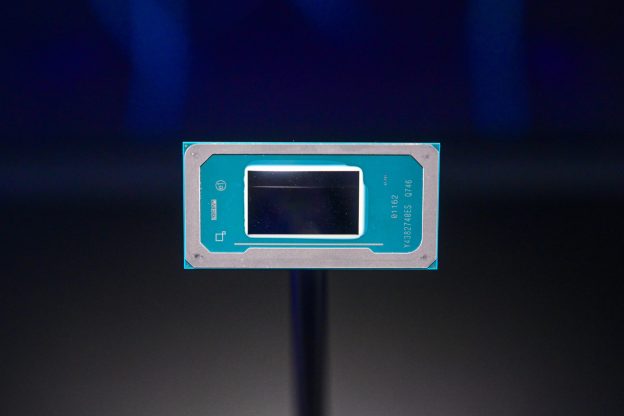
As the launch date of Intel’s “Panther Lake” approaches, more details about the chip are emerging from industry sources. According to TechNews, citing Reuters, the company recently held a closed-door briefing in Arizona to showcase its 18A process technology and new architecture design.
As TechNews notes, Panther Lake adopts Intel’s Hybrid Multi-Tile Design, integrating chips made with different processes in a single package. The report, citing sources, states that the CPU tile uses Intel’s 18A process, featuring RibbonFET gate-all-around transistors and PowerVia backside power delivery. In addition, the graphics tile (GPU) is reportedly manufactured by TSMC on its N3E process, while the SoC/I/O tile is produced using TSMC’s N6 process, according to TweakTown, citing industry sources.
In terms of architecture, according to TechNews, citing sources, the main compute die integrates four P-cores (Cougar Cove) and eight E-cores (Darkmont), while the SoC side adds four low-power efficiency cores (LPE), bringing the total to a 16-core design.
On the graphics side, the chip reportedly adopts the next-generation Xe3 (Celestial) architecture, with the high-end variant featuring a 12-core GPU—about a 50% increase over the previous Lunar Lake Xe2 (Battlemage), as TechNews notes. Its AI engine and media module have reportedly been fully upgraded to support on-device AI inference and high-efficiency image processing, while overall power consumption is estimated to be reduced by around 30%, TechNews highlights.
Notably, unlike Lunar Lake, which features on-package memory, Panther Lake reportedly adopts an external RAM architecture, enhancing platform scalability and cost flexibility, as TechNews indicates, citing Tom’s Hardware.
Intel’s 18A Process Roadmap and Platform Expansion
The chip will reportedly enter mass production in the second half of 2025 and hit the market in early 2026. In addition, TechNews mentions that beyond Panther Lake, Intel plans to introduce the Clearwater Forest and Nova Lake series. Clearwater Forest, based on Intel’s 18A process, targets the high-density server market. Nova Lake, positioned as the next-generation flagship product for mobile and desktop devices, will feature a CPU tile built with Intel’s 18A process, while the graphics and SoC tiles are reportedly partially outsourced to TSMC.
Read more
- [News] Intel to Unveil 18A at Tech Tour: Reportedly Limited Q3 Shipments, Panther Lake Debuts Oct. 9
- [News] First Intel 18A-Based Panther Lake Laptop Unveiled: Acer Leads with 16-Inch Ultralight Model
(Photo credit: Intel)
Please note that this article cites information from TechNews, Reuters, TweakTown, and Tom’s Hardware.