Popular Keywords



About TrendForce News
TrendForce News operates independently from our research team, curating key semiconductor and tech updates to support timely, informed decisions.
[News] SK hynix Reportedly to Double DRAM Capacity in 2H26 to Match Samsung, Pulls Back on NAND
Fresh off the massive boost from OpenAI’s Stargate project—with demand soaring to 900,000 DRAM wafers a month—South Korea’s memory titans are moving into expansion mode. The Bell reports that SK hynix plans to lift its DRAM wafer input to about 600,000 units per month in the second half of 2026, a level that would put it on par with Samsung.
The Bell suggests that Samsung’s DRAM output is projected to reach the mid-600,000 wafers per month range.
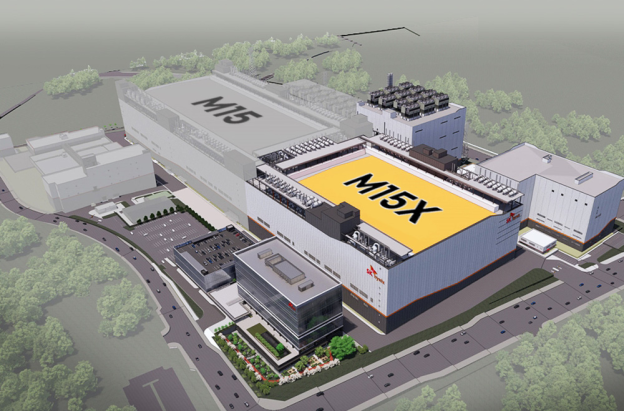
In detail, industry insiders told The Bell that SK hynix’s upcoming Cheongju DRAM plant, M15X, will anchor this expansion when it comes online in the first half of 2026. The fab is expected to start with around 10,000 wafers per month and gradually ramp to 50,000 by Q4 2026, the report notes. With that boost, SK hynix’s total DRAM capacity could climb to roughly 620,000 wafers per month by then—almost double the mid-300,000 level logged in 2023, the report adds.
According to Tom’s Hardware and Maeli Business Newspaper, OpenAI’s projected demand of 900,000 DRAM wafers per month could account for nearly 40% of global DRAM output and roughly match SK hynix’s entire quarterly HBM revenue. Based on this, SK hynix’s latest expansion move appears justified.
The Bell notes that SK hynix’s aggressive expansion is driven by soaring HBM demand, with around 30% of its DRAM capacity this year already devoted to HBM. Looking ahead, the report projects that by 2027 nearly 40% of SK hynix’s DRAM output will be tied to HBM.
In the second quarter of 2025, SK hynix led the DRAM market with a 38.7% revenue share, ahead of Samsung at 32.7% and Micron at 22%, according to TrendForce.
NAND Investment Pulls Back
However, The Bell reports that SK hynix will keep NAND investment muted through next year, largely due to weak demand in key areas like mobile. Instead of expanding capacity, the company will reportedly focus on conversion investments, as recovery remains mostly limited to data center eSSDs.
According to Chosun Biz, Samsung Electronics are said to be dialing down NAND output for smartphones while speeding up the conversion of its fabs toward server NAND as well. The rise of Chinese rivals with aggressive low-cost strategies has further eroded mobile NAND profitability, making the shift to enterprise SSD production unavoidable, the outlet adds.
Specifically, Chosun Biz notes that Samsung and SK hynix are zeroing in on demand for quad-level cell (QLC) NAND–based high-capacity storage, which has emerged as a key growth driver in the enterprise SSD market.
Read more
- [News] SK hynix Reportedly Negotiates Price Adjustments with Customers Following Micron, Samsung
- [News] SK hynix Reportedly Launches M15 Pilot Line for 1b DRAM Production Amid Big Tech HBM Surge
(Photo credit: SK hynix)
Please note that this article cites information from The Bell, Chosun Biz, Tom’s Hardware and Maeli Business Newspaper.