Popular Keywords



About TrendForce News
TrendForce News operates independently from our research team, curating key semiconductor and tech updates to support timely, informed decisions.
[News] Samsung’s DRAM Market Share Reportedly Plunges to 33% in H1, Bets on HBM and DDR5 Recovery
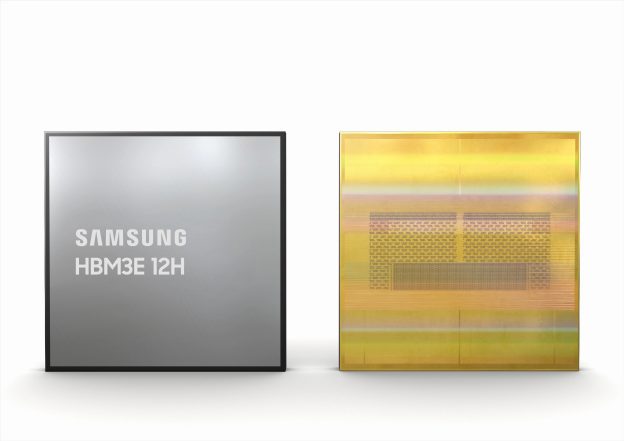
Samsung Electronics, struggling with HBM3E verification for NVIDIA, reported a drop in its global DRAM market share in its semi-annual report released on Aug. 14, according to South Korean media outlets Sedaily and The Hankyoreh. The company’s DRAM share by value reportedly fell to 32.7% in H1 2025, down 8.8 percentage points from 41.5% last year.
Notably, The Hankyoreh reports that Samsung’s DRAM share has fallen below 40% for the first time since 2014, dropping to 32.7% in H1 2025 from a peak of 48% in 2016. The decline reflects its weakness in HBM, the report adds.
This aligns with TrendForce’s findings: SK hynix led the DRAM market for the first time in Q1 2025 with a 36% share, while Samsung fell to 33.7% from 39.3% in Q4 2024.
Samsung’s 2H Push
As per Sedaily, Samsung plans to drive a strong rebound in the second half by focusing aggressively on advanced products, including HBM and high-capacity DDR5 for AI servers. The report suggests that Samsung poured 18 trillion won into R&D in H1 alone, signaling its resolve to overcome short-term setbacks and win the long-term technology race.
Notably, while Samsung has yet to pass NVIDIA’s 12-layer HBM3e qualification, Electronic Business News reports the company is accelerating the shift to 12-layer HBM3E, to the point of giving up sales of the 8-layer version for NVDIA’s China-tailored H20.
The report suggests that while SK hynix has been mass-producing 12-layer HBM3E since September, 2024, Samsung has yet to pass quality tests. The company is reportedly redesigning the HBM3E DRAM and boosting back-end production efficiency to catch up.
In addition, according to the Korea Economic Daily, Samsung is reportedly seeking package development experts to design new architectures for advanced HBM, while product planning hires will focus on coordinating with clients interested in customized HBM. The company aims to launch customized HBM as early as next year, targeting a faster catch-up with HBM pioneer SK hynix, the report adds.
While some suggest Samsung may prolong DDR4 production and delay its EOL plans, the company’s scale-down signals a pivot toward freeing up production lines for higher-value technologies like DDR5 and LPDDR5, as competition with China heats up.
On the other hand, despite recently landing a multi-billion-dollar AI6 chip production deal with Tesla, TrendForce expects the partnership won’t yield results before 2028, with major uncertainties ahead—largely hinging on the performance of Samsung’s first 2nm output.
Read more
- [News] Samsung Reportedly Pushes SoP Packaging on Ultra-Large Panel, Challenging TSMC and Intel
- [News] Samsung May Boost Taylor Investment Beyond $50B, Poised to Be 2nd-Largest Foundry in the U.S.
(Photo credit: Samsung)
Please note that this article cites information from Sedaily, The Hankyoreh, Korea Economic Daily and Electronic Business News.