Popular Keywords



About TrendForce News
TrendForce News operates independently from our research team, curating key semiconductor and tech updates to support timely, informed decisions.
[News] The TSMC 2nm Leak Lesson: When Elite Engineers’ Bright Futures Become Industry Warnings
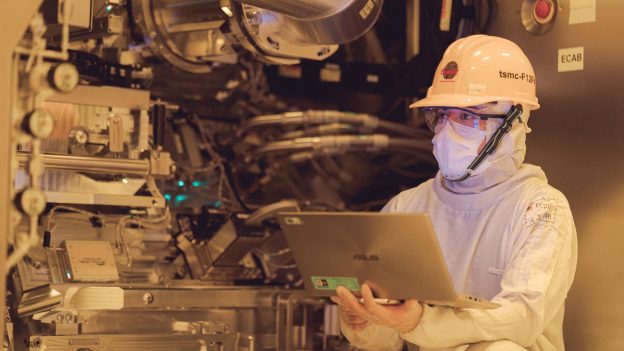
TSMC, spared from the looming 100% chip tariffs thanks to its massive U.S. investments, rocked the global semiconductor world recently by revealing a leak of its 2nm process. Reports say the company filed complaints with prosecutors, leading to three engineers being detained incommunicado.
Notably, according to the Liberty Times, these engineers were talented, young professionals—many with master’s degrees from Taiwan’s top national universities. Yet their alleged breach of trade secrets, potentially violating national security laws, has turned once-bright careers into stark warnings.
Behind the Engineers Involved
As Economic Daily News reported, the case has drawn sharp attention, as it involves TSMC’s cutting-edge 2nm technology and a former employee now working for Tokyo Electron (TEL)—a key TSMC supplier with close ties to Japan’s 2nm push through Rapidus.
Liberty Times, citing those familiar with the matter, suggests that TSMC launched a leak investigation in late June, initially targeting several internal engineers. However, the probe later found that confidential data had been repeatedly passed to the ex-employee.
Liberty Times reports that the accused engineer, a master’s graduate from a top university near Hsinchu Science Park, spent nearly eight years at TSMC, working on 5nm and 3nm yield improvement after starting in metrology. He later joined a Japanese equipment giant in 2022 as a senior marketing specialist, supporting TSMC’s etching tool operations, as the report indicates.
His direct supervisor, also a former TSMC employee, is described as a highly accomplished woman with an elite academic background from National Taiwan University, the report suggests.
Pressure at Work Behind the Case?
According to Liberty Times, the accused ex-TSMC engineer admitted collecting confidential data to improve equipment performance but insisted it was for internal use only and wasn’t shared further. However, after discovering he had taken nearly a thousand photos of the 2nm process flow—a volume unlike any before—TSMC filed a formal complaint with the High Prosecutors’ Office, the report adds.
Liberty Times further points out that although there’s no evidence the data was leaked externally, the act itself violated TSMC’s internal PIP (Protection of Intellectual Property) policy, forcing the company to take strict disciplinary and legal action to set an example and prevent future violations.
What makes this case unusual, industry insiders told Liberty Times, is that the engineers involved were still on the job—not defectors stealing secrets before jumping ship. The incident underscores the intense pressure in the semiconductor field, where engineers may resort to tapping contacts or gathering sensitive process data to prove their worth, the report notes.
Read more
- [News] TSMC’s 2nm Data Leak Exposes Fragile Triangle: TEL, Rapidus, and Taiwan-Japan Semiconductor Clash
- [News] TSMC Reportedly Fires Staff over Suspected 2nm Leak Ahead of Mass Production
(Photo credit: TSMC’s LinkedIn)
Please note that this article cites information from Liberty Times and Economic Daily News.