Popular Keywords



About TrendForce News
TrendForce News operates independently from our research team, curating key semiconductor and tech updates to support timely, informed decisions.
[News] Intel on the Move: Nova Lake Reportedly Tapes Out on TSMC’s 2nm, with 18A Yields Gaining Speed
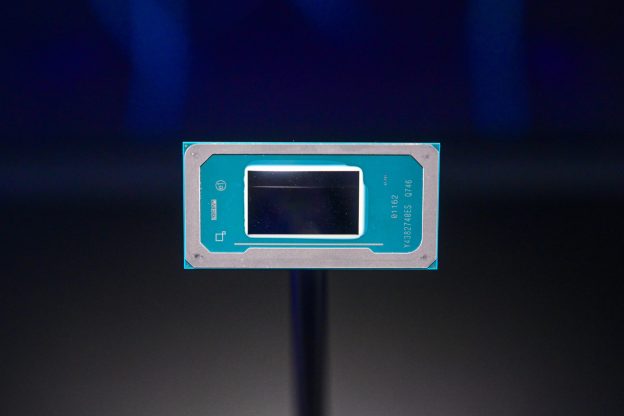
Despite challenges from massive layoffs, Intel is showing promising progress with its next-gen flagship processor and 18A yields. According to TechPowerUp and SemiAccurate, Intel’s “Nova Lake-S” client CPU has reportedly taped out at TSMC’s 2nm fab in Taiwan.
The reports reveal Intel taped out a compute tile on TSMC’s 2nm node a few weeks ago, indicating Nova Lake-S will likely blend Intel’s 18A with TSMC’s N2 for its compute tiles. This approach, as per the reports, gives Intel a fallback if 18A faces delays or if demand exceeds its in-house capacity. Either way, the progress shows that Nova Lake is still on track for release in the second half of 2026, the reports add.
The latest buzz echoes an April report from Economic Daily News, which revealed that the company has joined AMD and Apple as one of TSMC’s first-wave clients for 2nm. According to TSMC, Fab 20 in Hsinchu will serve as the main production hub for 2nm chips, with Fab 22 in Kaohsiung, Southern Taiwan, expected to come online soon.
18A Yields Could Approach 70% by Year-End
Notably, despite placing orders with TSMC, Intel’s 18A seems to be making solid strides, with yields climbing to 55% from 50% just last quarter, paving the way for high-volume manufacturing (HVM) by year-end, according to Wccftech.
Analysts cited in the report note that Intel’s 18A yields have surpassed Samsung’s SF2 (~40%) but still trail TSMC’s N2 at around 65%. Looking ahead, Wccftech, citing analysts, reports that 18A yields are expected to improve further, potentially reaching 70% by Q4 2025 — a sign of continued momentum.
According to Intel’s plan, the primary customer for 18A is Team Blue itself, and it plans to ramp up production of Panther Lake in late 2025, which it claims will be the most advanced processors ever designed and manufactured in the U.S.
Though primarily used for in-house products, 18A’s success could set the stage for Intel’s next step. According to Reuters, the company is reportedly planning a major shift in its foundry strategy—phasing out 18A in favor of the more advanced 14A node for future external clients like Apple and NVIDIA.
Read more
- [News] Intel’s Harsh Wake-Up Call: CEO Reportedly Says It’s No Longer a Top 10 Chipmaker
- [News] Intel Reportedly Weighs Dropping 18A, Bets on 14A to Attract Clients and Challenge TSMC
(Photo credit: Intel)
Please note that this article cites information from TechPowerUp, SemiAccurate, Wccftech, Reuters, Economic Daily News and TSMC.