[News] Moonshot Suspends Kimi K3 Subscriptions Amid Compute Crunch; Microsoft Reportedly Weighs Adoption
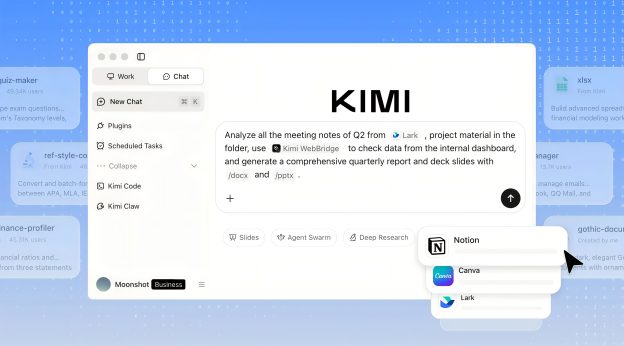
China continues to push ahead with AI model development, but computing capacity remains a key constraint. According to South China Morning Post, Chinese start-up Moonshot AI has temporarily suspended new subscriptions for its newly launched Kimi K3 model after surging demand pushed its computing resources close to capacity, highlighting the challenges Chinese AI labs face in serving global users with their products.
The company said demand over the past 48 hours had nearly reached the limits of its available computing capacity, placing significant pressure on its GPUs. Existing subscribers would not be affected, and the company is expanding capacity as quickly as possible, with new subscription slots to reopen in batches, the report adds.
Kimi K3’s advanced capabilities have drawn global attention. However, users have noted that the model runs noticeably slower than leading U.S. alternatives. Analysts cited by the report said Kimi K3 has helped narrow China’s AI model capabilities gap with the U.S. from months to just weeks, though compute constraints are expected to limit its global competitiveness. As a result, restricting Chinese AI labs and cloud providers’ access to high-end hardware ultimately weakens their ability to directly deliver AI services to users worldwide.
The company’s compute constraints come as China’s AI industry continues to face a shortage of computing resources. As noted by Jiemian News, citing industry experts, the biggest challenge today remains a shortage of computing power, particularly high-quality inference compute. From a supply-demand perspective, AI computing resources in China have long been in short supply, and the wave of new flagship model releases is expected to further tighten supply.
The Jiemian News report says model developers in China, including Moonshot AI, Zhipu, and MiniMax, primarily rely on two sources of computing power: renting compute services from public cloud providers or building their own computing clusters. However, public cloud resources are limited, while building proprietary clusters requires significant capital investment and long deployment cycles, leaving model developers under persistent pressure to secure sufficient computing capacity.
Kimi K3 Reportedly Draws Microsoft’s Interest
Meanwhile, Kimi K3’s rapid rise may also be drawing attention from global industry heavyweights. According to TechNews, citing The Information, Microsoft has reportedly shown strong interest in Chinese open-source models since shifting Copilot Cowork to a usage-based pricing model, as these models could significantly lower inference costs. Among the options under consideration is Moonshot AI’s Kimi K3. The report says Microsoft estimates that switching Copilot from OpenAI and Anthropic models to Moonshot AI’s Kimi K3 could reduce inference costs by as much as USD 600 million.
Moonshot is not alone in pushing larger frontier models. Competition among Chinese AI labs continues to intensify. As South China Morning Post notes, Alibaba recently previewed Qwen3.8, its upcoming 2.4 trillion-parameter model, which the company said ranks behind only Anthropic’s Claude Fable 5 and will be released as an open-weight model.
Read more
- [News] China AI Model Developers Ramp Up In-house Chips: DeepSeek, Zhipu Explore Custom Silicon
- [News] China Steps Up AI Push: Alibaba Latest Qwen Model Nears U.S. Rivals; Moonshot Advances
(Photo credit: Moonshot)