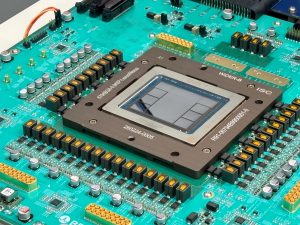
[News] Samsung Reportedly Developing 4nm GAIA AI PC Chip; Mass Production Targeted as Early as 2027
Samsung is reportedly preparing to enter the AI PC chip market. According to Hankyung, industry sources say Samsung Electronics’ System LSI Business under the Device Solutions (DS) Division is developing GAIA, a 4nm AI accelerator for AI PCs. Prototype chips have reportedly already been provided to major customers, including Lenovo and HP, for performance validation, with mass production targeted as early as 2027.
Samsung plans to pair GAIA with processing-in-memory (PIM), a next-generation DRAM technology that performs computations directly within memory, as the report indicates. Unlike traditional PC processors, GAIA is designed specifically for AI workloads, with an optimized NPU architecture aimed at efficiently handling generative AI tasks.
The reported move follows Samsung’s earlier attempt to enter the PC chip market 14 years ago with an Exynos application processor that powered Samsung Chromebooks in 2012. However, it failed to break Intel’s dominance and withdrew from the business roughly two years later.
AI PC Chip Competition Intensifies
Samsung’s reported move positions it alongside a growing number of companies targeting the AI PC market. The report says the segment remains in its early stages and has yet to produce a dominant player as the AI agent era begins to emerge. Companies including NVIDIA, Qualcomm, Intel, and Huawei are already competing in the space. NVIDIA unveiled its next-generation RTX Spark AI PC chip in May, while Qualcomm first introduced the Snapdragon X Elite in 2023 before expanding its lineup with the entry-level Snapdragon C.
EBN News says Samsung Electronics aims to differentiate itself by leveraging its leadership in memory alongside the AI chip design expertise gained from developing smartphone APs and mobile NPUs. Industry observers believe that combining AI accelerators with processing-in-memory (PIM) technology could enhance both AI processing performance and power efficiency.
Industry observers cited by Hankyung say the success of Samsung’s AI PC chip initiative will depend largely on its ability to secure major customers and bring the product to market. If the company achieves mass production and builds a stable supply chain, the business could emerge as a key growth driver, helping the System LSI Business address its long-standing structural losses.
Despite the growth opportunity, Samsung’s expansion into the AI accelerator market may also present strategic challenges. Hankyung notes that companies including NVIDIA and Qualcomm, which Samsung is expected to compete against in the AI PC market, are also among Samsung Foundry’s key customers.
- [News] Samsung Reportedly Expands 2nm Portfolio Ahead of 2029 SF1.4 Mass Production; SF2P+ Targets 2027–28
- [News] Samsung Groq Orders May Jump ~70% to 15K Wafers; Tesla Reportedly Delays Other Foundry Clients
(Photo credit: Samsung)