[News] Intel Lip-Bu Tan Reflects on Taiwan’s Semiconductor Journey, Highlights AI and 18A Roadmap at COMPUTEX
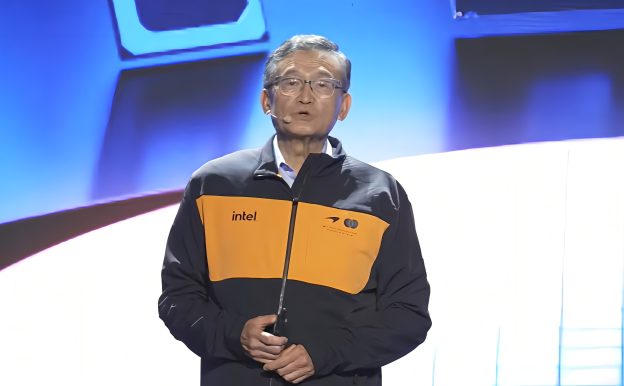
As AI shifts from training to inference, CPUs are once again taking center stage in the industry, putting Intel firmly back in the spotlight. Intel CEO Lip-Bu Tan’s appearance at COMPUTEX has therefore drawn significant attention. According to Economic Daily News, Tan used his keynote to outline Intel’s AI strategy across PCs, edge and physical AI, data centers, and emerging intelligence centers, while also reflecting on the close-knit semiconductor ecosystem that Taiwan and Intel have built through a relationship that is both cooperative and competitive.
Tan opened with a local touch, greeting the audience in Chinese with “Good afternoon, everyone.” As the report notes, Intel’s first CEO able to speak Chinese quickly drew laughs from the crowd by joking that he had climbed more than 1,000 steps on Taipei’s Xiangshan Trail the previous evening and managed to “survive.”
He later reflected on his deep ties to Taiwan. According to TechNews, Tan said he was fortunate to have been involved in the early development of Taiwan’s semiconductor industry nearly 40 years ago. Invited by K.T. Lee, a leading figure in Taiwan’s technology development, he came to Taiwan and, with backing from Lee and the National Development Fund, established a venture capital fund. Around the same time, Morris Chang returned from Texas Instruments and later founded TSMC.
Looking back on Taiwan’s semiconductor journey, Tan also praised the ecosystem’s global impact today. As Economic Daily News notes, Tan said Taiwan’s PC ecosystem played a pivotal role in Intel’s growth. Expressing gratitude to the company’s Taiwanese partners, he added that their relationship will only become closer in the future.
Intel Seeks AI Momentum From Handheld Gaming to Data Centers
Meanwhile, at COMPUTEX, Lip-Bu Tan also invited Alex Katouzian, General Manager of the Client Computing and Physical AI Group, to outline Intel’s strategy for AI PCs, edge computing, and physical AI. As Economic Daily News notes, Katouzian showcased the Arc G3 graphics chip for handheld gaming devices. According to the report, the Core Ultra Series 3-based chip is optimized for the handheld market, delivering more than 40% higher gaming performance than competing products while using half the power at the same performance level.
Intel also shared updates on its data center roadmap. According to Tom’s Hardware, the company confirmed that its next-generation Xeon 7 “Diamond Rapids” processors will launch in 2027 on the Intel 18A-P process. Ahead of that release, Intel plans to introduce the E-core-only Xeon 6+ family, codenamed “Clearwater Forest,” which will be the first data center CPUs built on Intel 18A.
Read more
- [News] Intel Reportedly to Adopt Silicon Capacitors in 2027 to Improve EMIB Power Stability for Google’s v8e
- [News] Intel 18A Yields Up 7%–8% Monthly as 2H26 Customers Expected; Said to Push 18A CPUs Amid Shortages
(Photo credit: Intel)