[News] China’s Chip Push Extends Beyond State Efforts, From Xiaomi’s 3nm SoC to NIO Autonomous Driving Chips
For years, China’s semiconductor push has been driven by state-backed capital and nationwide efforts to overcome technological bottlenecks. However, according to OFWeek, the country’s chip race is no longer solely government-led, as major companies increasingly pursue semiconductor development to strengthen supply chain autonomy. The following highlights how Xiaomi, BYD, and NIO are advancing semiconductor development across different sectors.
Xiaomi Pushes Further Into Flagship SoCs
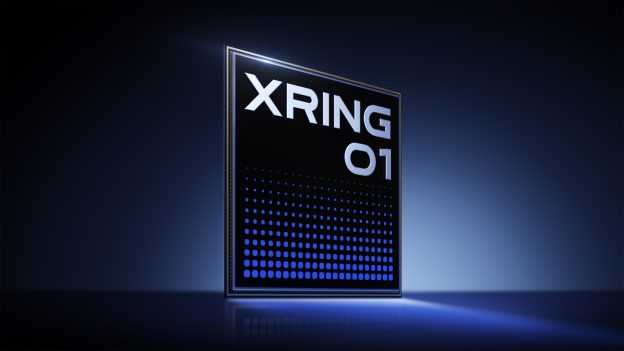
Xiaomi’s chip ambitions center on smartphone SoCs, placing the company in competition with Apple’s A-series, Qualcomm’s Snapdragon, and MediaTek’s Dimensity chips. According to the report, Xiaomi’s XRING O1 uses TSMC’s 3nm process and features a 10-core CPU and 16-core GPU architecture. For now, Xiaomi’s in-house chips remain limited to select devices such as the Xiaomi 15S Pro, while Qualcomm and MediaTek processors continue to dominate higher-volume models.
Notably, according to EE Times China, Xiaomi Group President William Lu recently confirmed during a livestream that Xiaomi will launch an upgraded version of its in-house XRING chip this year. As indicated by ITHome, citing Ximitime, Xiaomi’s next-generation in-house XRING O3 chip reportedly adopts a major architectural redesign, replacing traditional large-core clusters with a Prime Core + Titanium Core + Little Core configuration. Little Core frequencies are said to reach 3.02 GHz, up roughly 68% from the XRING O1, while GPU clocks approach 1.5 GHz, a 25% increase. EE Times China adds that the chip may use TSMC’s N3P process.
BYD’s Power Semiconductor Strategy Reinforces Its EV Advantage
BYD’s semiconductor efforts have historically focused on power chips. As the OFWeek report notes, Insulated Gate Bipolar Transistors (IGBTs) and SiC devices are core components in electric control systems. BYD began developing in-house IGBTs in 2005 and has since established SiC production lines. The company currently holds the largest share of China’s new energy vehicle power module market, with OFWeek adding that roughly 70%–90% of its IGBT and SiC demand is reportedly supplied internally, a level rarely matched among global automakers.
That push into semiconductor self-sufficiency now appears to be expanding beyond power devices. As noted by Sohu, BYD announced in the first quarter that its in-house “Xuanji” intelligent driving chip is set to enter mass production in 2Q26. The chip reportedly delivers 2,000 TOPS of computing power, supports a single-chip cockpit-and-driving integrated architecture, and costs only one-third as much as international alternatives while enabling greater control over core computing capabilities.
NIO Eyes External Markets for Autonomous Driving Chips
Turning to NIO, the company’s chip strategy centers on autonomous driving processors. As noted by ifnews, NIO said that the Shenji NX9031, described as the world’s first flagship intelligent driving chip built on an advanced 5nm process, delivers industry-leading performance in inference computing power, memory bandwidth, and inter-chip connectivity.
OFWeek adds that NIO spun off its chip business into an independent entity, Shenji, in June 2025, signaling that semiconductors have become strategically important beyond internal use. That ambition may extend further. As noted by Investing.com, NIO is exploring opportunities to sell its autonomous driving chips to external customers, potentially creating new revenue streams while helping offset substantial R&D costs.
Read more
- [News] Xiaomi’s Next Foldable Reportedly to Feature Self-Developed XRING O3 Chip, May Use 3nm Process
- [News] Xiaomi Doubles Down on Chips; Trademark Filing Reportedly Signals Potential Memory Entry
(Photo credit: Xiaomi)