[News] YC Chem Reportedly First to Supply Glass Substrate Photoresists; Customer Eyes Year-End Mass Production
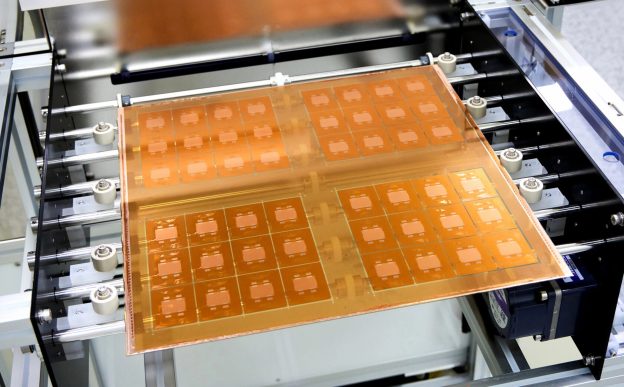
South Korea’s YC Chem has reportedly become the first in the industry to supply photoresists for glass substrates. According to The Elec, sources say the company is supplying i-line photoresist, stripper, and developer materials for glass substrates to a customer after receiving a purchase order (PO) following qualification tests.
As supply of related materials begins to ramp up, commercialization of glass substrates also appears to be drawing closer, the report notes. Current shipments are intended for the customer’s prototype production, with material supply volumes expected to increase gradually as the customer moves toward mass production from the end of this year.
The company is also seeking additional customers. According to the report, it is currently in discussions with more than three companies regarding the supply of glass substrate materials. With some firms, sample testing is underway for negative photoresists and glass substrate coating materials.
YC Chem has also supplied prototype coating materials for glass substrates to customers. These materials are intended to minimize cracking and warpage caused by differences in thermal expansion coefficients (CTE) and thermal conductivity between glass and copper. According to the report, the products are currently undergoing qualification testing.
The report notes that the coating materials are used in embedding-type glass substrates, which integrate circuits and passive components directly within the glass substrate itself.
Key Requirements for Photoresists in Glass Substrate Manufacturing
As the report points out, the glass substrate photoresist supplied by YC Chem is based on i-line technology, which uses a 365-nanometer (nm) mercury lamp wavelength in the lithography process. Notably, the report points out that, unlike extreme ultraviolet (EUV) photoresists used in advanced semiconductor manufacturing, glass substrate production places greater emphasis on thicker film thickness and strong etch resistance.
In particular, the report states that through-glass via (TGV) processes require strong chemical durability and high etch resistance during hole formation and copper plating. As a result, demand is increasing for longer-wavelength lithography materials such as i-line and krypton fluoride (KrF)-based photoresists.
In South Korea, Samyang NC Chem is also developing photoresist materials for glass substrates. The report adds that the company has supplied samples to more than two customers and is reportedly aiming for mass production next year.
As major companies accelerate glass substrate development, securing stable material supplies is becoming increasingly important. A January Chosun Biz report said Absolics is diversifying suppliers by adding a domestic partner for glass substrate photoresists, reducing reliance on Japan’s TOK, while also reviewing process dualization for TGV and plating processes through additional collaborators.
Read more
- [News] SKC Said to Speed Glass Substrate Mass Production by Year-End; Advances New Non-Embedding Tech for U.S. Client
- [News] Researchers Reportedly Develop Ultrafast Laser Wiring for Glass Substrates, Targeting CPO Bottleneck
(Photo credit: SKC)