[News] Potential Supply Disruptions of Tungsten Hexafluoride from Japan: Implications for the Semiconductor Industry
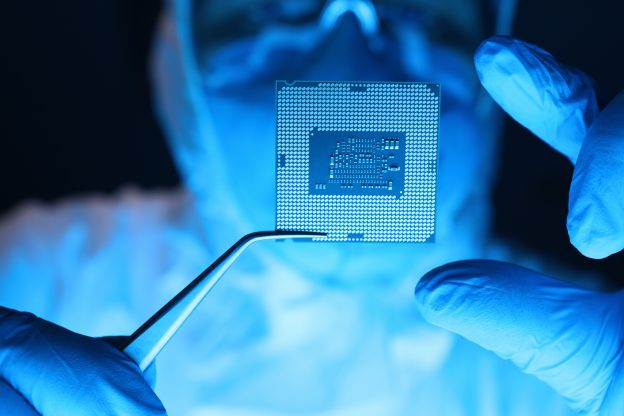
Recent media reports indicate that some Japanese suppliers of tungsten hexafluoride (WF₆) have notified Korean semiconductor companies of possible disruptions in raw material supply, with existing inventories expected to last only until mid-2026. Industry observers warn that such supply constraints could drive up chip manufacturing costs, delay mass production of advanced-node devices, and further pass on to downstream, potentially leading to product shortages and price increases in end markets.
The Role of Tungsten Hexafluoride in Semiconductors
Tungsten hexafluoride (WF₆) is an inorganic compound and a high-valence fluoride of tungsten. Under ambient conditions, it is a colorless, highly corrosive, and toxic gas.
In semiconductor manufacturing, WF₆ serves primarily as a key precursor in chemical vapor deposition (CVD) processes, with core functions including:
Deposition of tungsten films: Under high temperatures, WF₆ reacts with reducing agents such as hydrogen to deposit tungsten thin films on wafer surfaces, which are widely used to build conductive structures including interconnects, contacts, and vias, enabling electrical signal transmission within chips.
Enhancing chip performance: Tungsten’s low resistivity, high melting point, and strong resistance to electromigration help reduce signal delay and power consumption, improving chip speed and reliability. In advanced nodes (7nm and below) and high-density devices such as 3D NAND, its gap-filling capability and conductivity are critical to yield.
Formation of tungsten silicide: WF₆ can also react with silane to form tungsten silicide (e.g., WSi₂), which serves as an interconnect material in large-scale integrated circuits, further optimizing electrical performance.
Impact of Supply Disruptions on Semiconductor Companies
The global WF₆ supply landscape is characterized by “China and Korea leading, with Japan and Europe following.” Chinese suppliers account for over 50% of global market share, supported by tungsten resource advantages and capacity expansion. While Japanese suppliers have relatively limited capacity, they are known for stronger technical capabilities, particularly in batch consistency and product stability, and supply both domestic and international semiconductor companies. Against this backdrop, a potential supply halt from some Japanese vendors could have several implications:
Korean memory makers, including Samsung, are highly dependent on Japanese WF₆ supply. Once inventories are depleted, production of advanced nodes such as 3D NAND and DRAM could face sharp declines.
Advanced logic chip manufacturing also relies on WF₆. Any supply disruption may delay volume production schedules, directly affecting delivery timelines for AI chips and high-end smartphone processors.
Rising material costs: Anticipation of supply shortages has already pulled up WF₆ prices. Prolonged tight supply would significantly increase chip production costs, weakening market competitiveness.
Regarding China’s semiconductor sector, industry sources note that while domestic suppliers have established a certain level of WF₆ production capacity, high-end (7nm-class) products remain in a critical validation and ramp-up phase. Supply disruptions could therefore constrain capacity utilization in some segments.
(Photo credit: FREEPIK)