[News] Memory Giant Shifts Strategy: Samsung Reportedly Eyes 3–5 Year Contracts to Stabilize Supply
South Korea’s memory giants, once reluctant to lock in long-term deals amid tight supply, may be shifting stance. Bloomberg, citing Co-CEO Jun Young-hyun’s remarks at the shareholder meeting on March 18, reports that Samsung is now exploring multi-year memory contracts to secure supply stability and ease concerns over potential shortages.
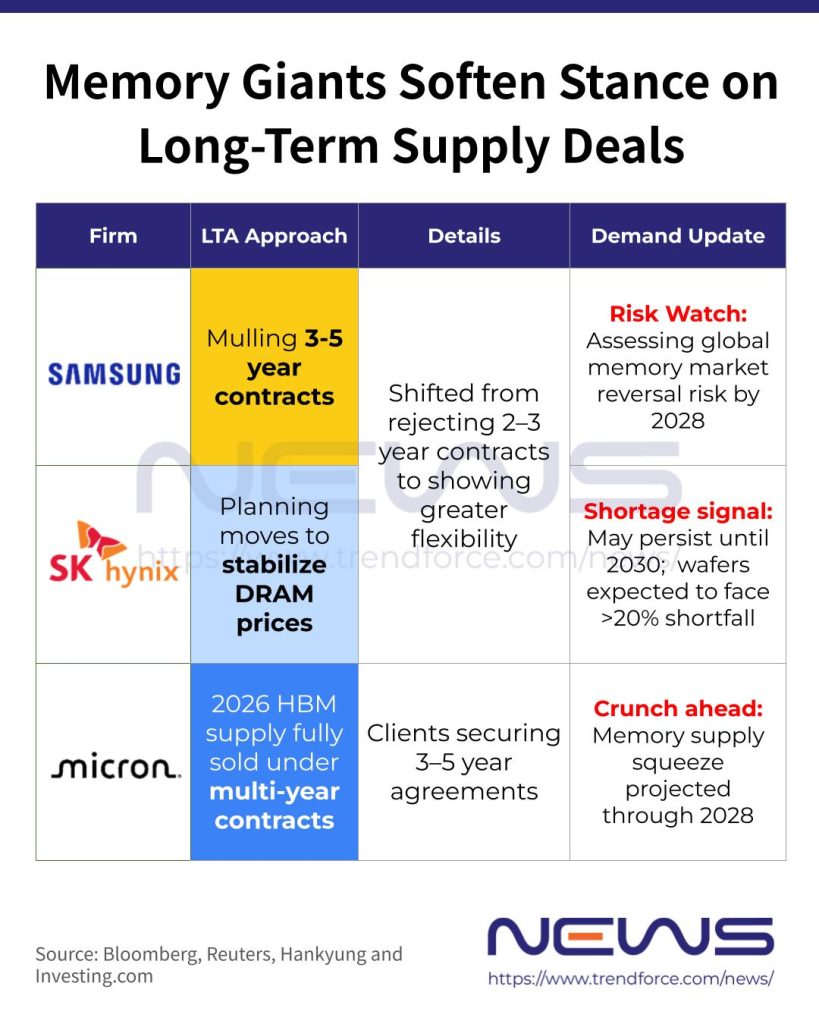
The report, citing Jun, notes that Samsung is considering extending agreements from the typical quarterly or yearly terms to as long as three to five years. The move comes as demand for AI memory chips is projected to keep climbing through 2026, he added.
Market analysts cited by Global Economic observe that if Samsung does adopt long-term contract structures, chipmakers could secure more stable cash flows—but at the cost of reduced downside flexibility in memory pricing. The report further points out that in the past, memory prices would drop sharply during downturns, helping ease consumer prices, but widespread adoption of long-term contracts could weaken that cushioning effect.
Still, Samsung appears to be taking proactive steps to brace for a future downturn. Beyond considering long-term deals with clients, the company—according to Chosun Daily—is reportedly assessing the risk of a global memory market reversal as early as 2028. While capitalizing on the AI surge to boost profits, it is simultaneously tightening operational discipline to prevent another cycle of overcapacity, the report notes.
It is interesting to note that the recent atmosphere marks a striking shift from earlier market behavior. In January, Hankyung reported that Samsung and SK hynix had pitched first-quarter server DRAM prices up 60–70% from Q4 last year to major clients including Microsoft and Google, yet both had rejected long-term agreements of two to three years, sticking instead to quarterly contracts.
SK hynix Signals Market Moves
On the other hand, Bloomberg reports that SK Group Chairman Chey Tae-won hinted at upcoming initiatives to stabilize memory prices. While he did not provide details, the report suggests that SK hynix may soon roll out concrete measures to achieve this.
As reported by Reuters, Chey said the global shortage of semiconductor wafers could persist until 2030, with the wafer supply gap potentially exceeding 20%, as demand driven by AI continues to outpace supply.
Another memory giant, Micron, set to release its earnings on the 18th (U.S. time), is drawing analyst confidence thanks to its next-generation HBM4 and improved visibility on long-term agreements (LTAs), Edaily reports.
Read more
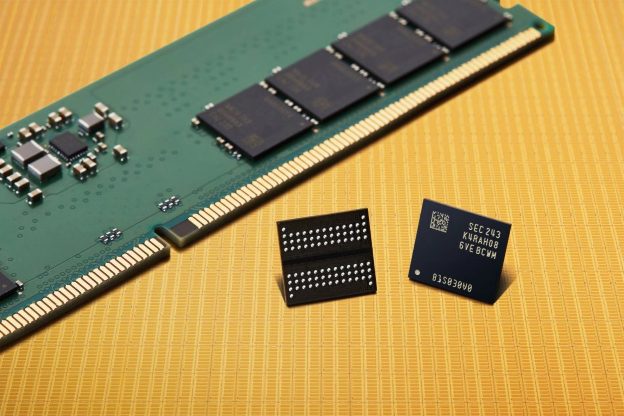
(Photo credit: Samsung)
Please note that this article cites information from Bloomberg, Global Economic, Chosun Daily, Hankyung, Reuters and Edaily.