[News] Tokyo Electron Reportedly Raises FY26 CapEx 48% to Record High, Bets on DRAM Etching Demand
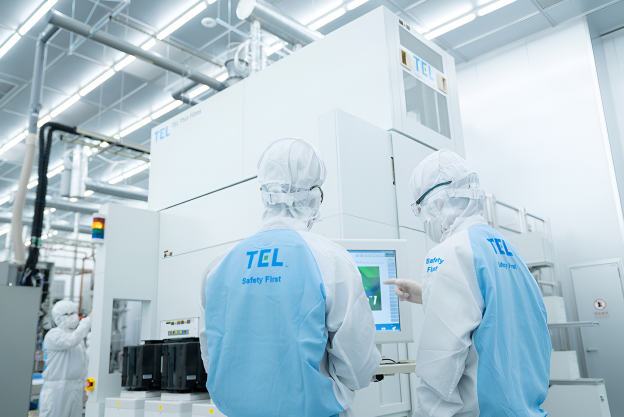
Rising memory prices are expected to lift production and drive stronger demand for chipmaking equipment. According to Nikkei, Toshiki Kawai, president of Tokyo Electron, said the wider adoption of AI is boosting chip demand, prompting memory makers to ramp up equipment purchases from 2026. As a result, the company is positioned to benefit from record levels of capital expenditure and research and development investment.
As the report highlights, Tokyo Electron, which sold tens of billions of yen worth of etching systems for DRAM interconnection in the fiscal year ended last March, is targeting cumulative sales of ¥500 billion ($3.2 billion) by fiscal 2030.
HBM Scaling Boosts Demand for Advanced Etching
Rising memory demand is prompting global manufacturers to increase spending. As the report notes, AI processors from companies such as NVIDIA rely on multiple HBM stacks, tightening supply across the market. In response, South Korea’s SK hynix and Samsung Electronics are committing billions of dollars to new production facilities scheduled to come online between 2027 and 2028.
Tokyo Electron sees etching equipment, used to form circuits on silicon wafers, as a key growth area. According to the report, HBM stacks multiple DRAM chips, and as performance demands rise, the number of layers continues to increase. This, in turn, requires additional interconnection steps, which the company expects will drive stronger demand for the systems used in those processes.
Against this backdrop, Tokyo Electron is stepping up investment to capitalize on the industry supercycle. While the company expects net profit for fiscal 2025 to decline 10% to ¥488 billion due to delayed customer spending, it plans to raise R&D outlays by 16% to ¥290 billion and increase capital investment by 48% to ¥240 billion, both reaching record levels. The company has also completed new development facilities, along with expanded production and logistics centers, across multiple sites in Japan.
Chip Equipment Investment Wave Extends Beyond Tokyo Electron
Tokyo Electron is not alone in ramping up investment to ride the industry supercycle. According to South Korean outlet Bloter, Hanmi Semiconductor is investing 100 billion won to build a two-story hybrid bonder plant with a total floor area of 4,415 pyeong (about 14,571 square meters), targeting completion in the second half of this year. The facility will manufacture next-generation equipment, including TC bonders for HBM.
Despite strong industry momentum, Bloter adds that while materials, components, and equipment (MSE) suppliers are accelerating investment to expand capacity, heavy spending driven by boom-cycle expectations could backfire and pressure companies if demand weakens.
Read more
- [News] Tokyo Electron Sees AI-Driven Sales Hitting 40% by FY2026, Offsetting China Slowdown
- [News] China Reportedly Promotes Domestic Chip Tool Adoption Under 50% Rule, Pressuring Korean Suppliers
(Photo credit: Tokyo Electron)