[News] Kioxia Reportedly to Make 332-Layer 10th-Gen NAND at Kitakami in 2026, Repurposing Existing Fab
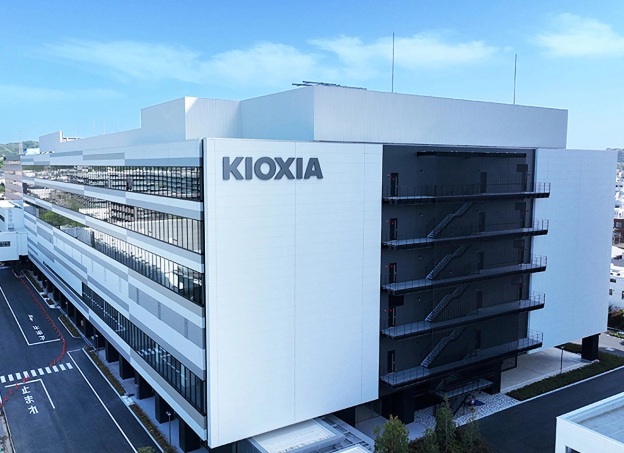
Japan’s Kioxia is making a strategic push at a time when major memory makers remain cautious about expanding NAND capacity. According to Nikkei, as cited by MoneyDJ, the company plans to begin mass production of its 10th-generation NAND at its Kitakami plant in Iwate Prefecture in 2026—aiming squarely at surging demand from AI data centers.
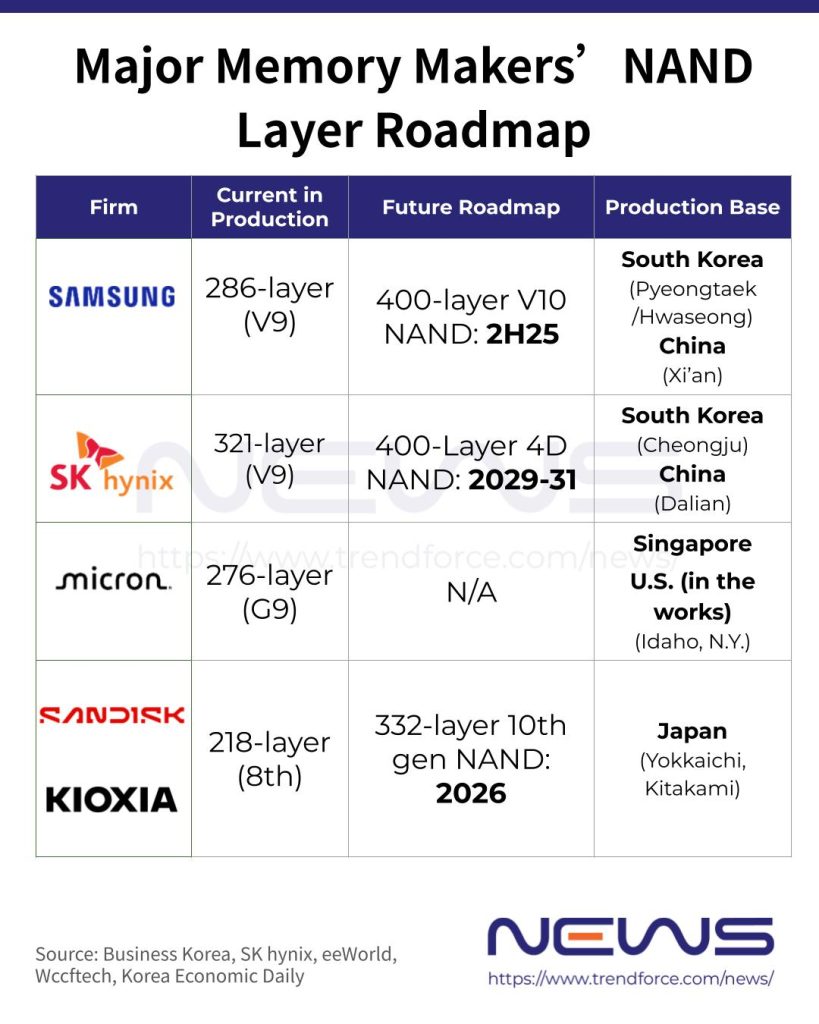
Although the move may appear to be a technological leap, with Kioxia’s 10th-generation NAND adopting a 332-layer stack versus the 218 layers in its current 8th-generation lineup, the company is reportedly taking a more pragmatic approach on the manufacturing side. Instead of building a new fab, Kioxia is expected to repurpose its recently opened Kitakami K2 facility—which began operations in September—to produce the new generation, MoneyDJ reports.
In terms of details on Kioxia’s 10th-gen NAND Flash, Tom’s Hardware reported in February that Kioxia’s 10th-generation NAND extends the company’s CMOS directly Bonded to Array (CBA) technology—first introduced in 8th-gen products—with substantial performance upgrades.
The new chips, according to the report, feature 332-layer stacking, up 38% from the previous 218 layers, enabling 59% higher storage density. Data transfer speeds reach 4.8 Gb/s, a 33% improvement over the prior generation.
TrendForce observes that the Kioxia/SanDisk consortium—lacking DRAM businesses—is leading with the most assertive strategies to enhance their market positions. Kioxia/SanDisk plans to increase investments by 41% year-on-year to $4.5 billion in 2026, focusing on expanding BiCS8 production and supporting BiCS9 R&D, according to TrendForce.
Read more
- [News] U.S., Japan Rumored Mulling Joint NAND Fab, with Kioxia, SanDisk Likely In
- [News] Kioxia Quarterly Profit Tumbles 62% YoY, But Signals Bottom with Record 3QFY25 Sales Forecast
(Photo credit: Kioxia)
Please note that this article cites information from Nikkei, MoneyDJ, and Tom’s Hardware.