[News] UMC Licenses imec’s iSiPP300 to Advance Silicon Photonics, Eyes 2026–27 Risk Production
Just weeks after GlobalFoundries acquired Singapore’s silicon photonics foundry AMF in mid-November, Taiwan’s UMC is making its own move in the sector. On December 8, the foundry announced a licensing deal with imec to adopt the iSiPP300 silicon photonics process, featuring co-packaged optics (CPO) support, marking a step forward in its silicon photonics roadmap.
According to UMC, licensing imec’s cutting-edge silicon photonics process allows the company to fast-track its 12-inch photonic platform. GC Hung, the foundry’s Senior VP, stated that UMC is collaborating with new customers to deliver PIC chips for optical transceivers, with risk production planned for 2026–2027.
UMC explains that as copper interconnects hit their limits under soaring AI workloads, silicon photonics—transmitting data with light—is advancing fast to meet the high-bandwidth, low-latency, and energy-efficient needs of data centers and HPC networks.
Capitalizing on this fast-growing market, UMC is expected to combine imec’s proven 12-inch silicon photonics process with its own silicon-on-insulator (SOI) wafer expertise, building on prior 8-inch silicon photonics experience to deliver a highly scalable photonic IC (PIC) platform for its customers.
As the Economic Daily News reported, while UMC has traditionally focused on mature nodes, its expertise aligns perfectly with most silicon photonics platforms that use 28nm and 22nm processes. This gives UMC a natural edge as it eyes higher-value, higher-margin product lines, the report suggests.
According to the Economic Daily News, UMC’s partnership with imec offers three key advantages: first, UMC can leverage imec’s photonic PDKs and jointly develop and verify designs without starting from scratch; second, it significantly shortens the timeline to commercial mass production; and third, it facilitates smoother technical alignment with major international customers.
TSMC Leads in the Silicon Photonics Race
However, Taiwanese foundry giant TSMC remains ahead in the race. Sources cited by the Economic Daily News report that NVIDIA will heavily integrate silicon photonics and CPO technology into AI servers starting with its next-generation Rubin architecture.
In line with NVIDIA’s timeline, TSMC’s COUPE (Compact Universal Photonic Engine) completed verification in H1 2025, with NVIDIA’s Spectrum-X already adopting the technology, as per Liberty Times. Next year, TSMC is expected to integrate silicon-photonics-based CPO directly into CoWoS packaging and move into mass production, Liberty Times notes.
Read more
- [News] Silicon Photonics Momentum Builds: Samsung Ramps R&D in Singapore, UMC Teams With IMEC
- [News] Taiwan Chip Giants Capitalize on CPO Boom as MediaTek, TSMC Race Ahead on SerDes
- [News] Silicon Photonics in the Spotlight: TSMC Lifts the Curtain on COUPE at SEMICON Taiwan
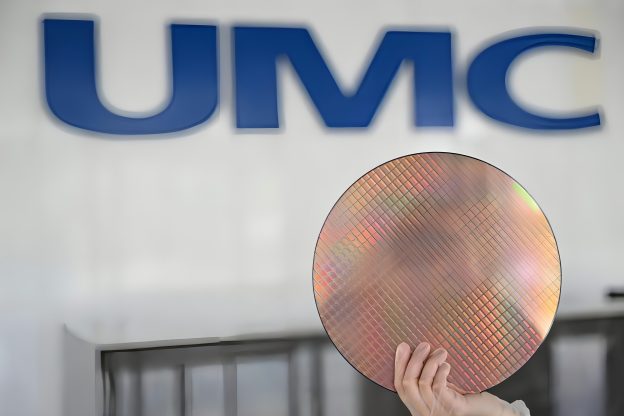
(Photo credit: UMC)
Please note that this article cites information from UMC, Economic Daily News, and Liberty Times.