[News] Intel CEO Lip-Bu Tan Reportedly Meets Saudi Minister to Advance AI and Chip Cooperation
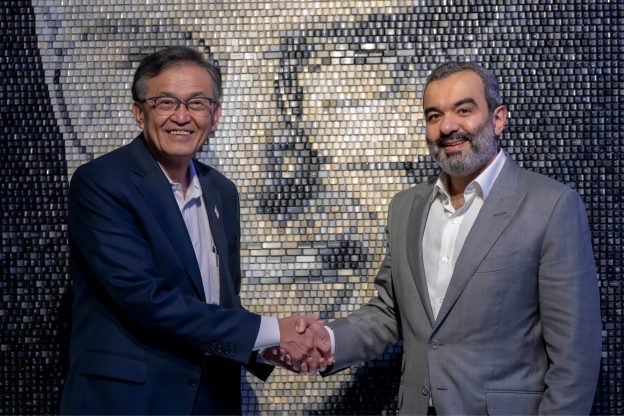
This year, Intel has attracted several strategic partners and funding sources, including NVIDIA, SoftBank, and support from the U.S. government. The company now plans to broaden its collaborations with partners in Saudi Arabia. According to Arab News, Saudi Arabia’s Minister of Communications and Information Technology, Abdullah AlSwaha, met with Intel CEO Lip-Bu Tan to explore potential partnerships in semiconductors and advanced computing, as well as ways to enhance cooperation in building AI infrastructure.
As the report notes, the meeting in the U.S. is part of Saudi Arabia’s broader effort to strengthen its role as a global hub for AI and advanced computing, while localizing semiconductor value chains in line with the goals of Saudi Vision 2030.
Wccftech points out that the idea of Intel establishing a chip manufacturing facility in a country like Saudi Arabia is not far-fetched, given the nation’s strong capacity to sustain such operations. As the report highlights, Intel requires substantial investment and has already partnered with SoftBank, whose fund is backed by Saudi Arabia’s Public Investment Fund (PIF).
Meanwhile, Wccftech notes that the UAE and Saudi Arabia are undergoing a major economic transformation, redirecting their focus toward technological development and expanding into sectors such as AI and semiconductors. While Saudi Arabia has limited manufacturing experience, the country possesses the financial capacity to make significant investments in these ventures, the report adds.
In addition to his meeting with Intel CEO Lip-Bu Tan, Saudi Gazette reports that Saudi Minister of Communications and Information Technology Abdullah AlSwaha also held discussions with Waymo Co-CEO Tekedra Mawakana and OpenAI CEO Sam Altman during his visit to the United States. The minister also met with NVIDIA CEO Jensen Huang, according to another report.
Read more
- [News] Intel Reportedly Raises Prices Up to 20% for Intel 7-Based Raptor Lake, Alder Lake; Asia Market Hit Hard
- [News] Mega NVIDIA-Intel Deal: No Chipmaking Orders, Co-Developed Products Might Launch 2027–28
(Photo credit: Saudi Arabia Ministry of Communications and Information Technology)
Please note that this article cites information from Arab News, Wccftech, and Saudi Gazette.