[News] Samsung Q3 Profit Soars 158% to 12 Trillion Won as Memory, Foundry Rebounds Fuel Strong Turnaround
Amid a rebound in memory and foundry performance, Samsung Electronics said Tuesday its third-quarter operating profit likely jumped 32% year-on-year to 12.1 trillion won ($8.5 billion), far exceeding market expectations of roughly 10 trillion won, according to Reuters, ZDNet and the Chosun Daily.
As noted by the Chosun Daily, Samsung’s operating profit topped 10 trillion won for the first time in five quarters — the highest since Q2 2022 (14.1 trillion won) — marking a dramatic 158% rebound from the previous quarter, when losses from unsold memory inventory dragged results down.
Although detailed figures weren’t disclosed, the report, citing analysts, estimates Samsung’s semiconductor division (DS) alone earned around 5 trillion won, more than 10 times its Q2 profit of 400 billion won.
Samsung is set to unveil full results, including business-by-business breakdowns, on October 30, as per Reuters.
Memory Rebound
Reuters, citing analysts, suggests that Samsung’s chip sales for the quarter remained solid overall, lifted by higher prices and shipments, while HBM products made up a larger slice of the memory mix. The upbeat figures point to robust server and AI chip demand, which has driven up both prices and shipments of standard DRAM and NAND products, the report adds.
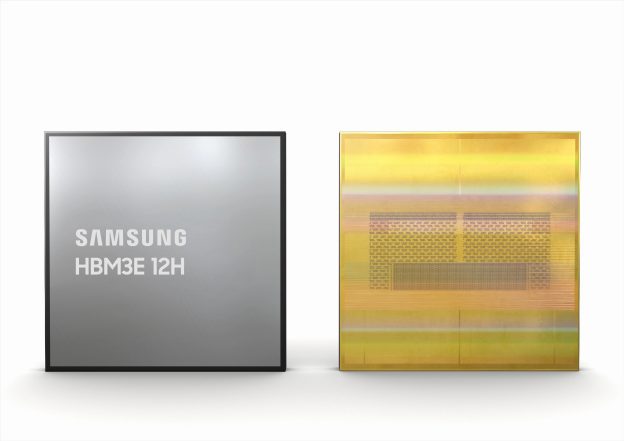
Following NVIDIA’s approval of Samsung’s 12-layer HBM3e for the GB300, ZDNet notes that Samsung’s HBM shipments are set to climb compared with the first half of the year. While Q2 fell below 1 billion Gb, Q3 volumes are expected to reach the early-to-mid 1 billion Gb range, the report suggests.
Foundry Comeback
Another key factor behind Samsung’s third-quarter rebound is the strong turnaround in its foundry business. According to The Chosun Daily, the division has boosted performance through higher utilization rates and new customer wins, signaling a clear recovery. Fresh orders, especially for 4–8nm nodes, have been a major driver of growth, the report adds.
In addition, the report highlights momentum is also building around the Exynos 2600, Samsung’s in-house smartphone AP developed on its 2nm process. With the chip increasingly likely to power the upcoming Galaxy S26 series, the foundry is set to see even higher utilization, as per The Chosun Daily.
According to ZDNet, Samsung’s system LSI and foundry units, which logged an operating loss of about 2 trillion won in Q2, reportedly narrowed the deficit to around 1 trillion won in the third quarter.
The improvement came as the company secured more customers for its 7nm-class process and benefited from stronger mobile AP and CIS (CMOS image sensor) shipments within its system LSI business, ZDNet says.
Read more
(Photo credit: Samsung)
Please note that this article cites information from Samsung Electronics, Reuters, ZDNet and the Chosun Daily.