[News] U.S. Eyes TSMC Stake: Legal Hurdles, Shareholder Concerns, and What’s at Play
U.S. Commerce Secretary Howard Lutnick, as per Reuters, is weighing a plan to swap CHIPS Act subsidies for equity stakes in recipients such as TSMC, Samsung, and Micron—an idea drawing intense scrutiny over both its impact and feasibility.
According to the Economic Daily News, before the plan could materialize, Washington must first resolve legal hurdles, then negotiate fair terms, and clarify whether any stake would be in TSMC’s parent company, its Arizona subsidiary, or a new spin-off. Here’s a full breakdown of the key issues and what’s at stake.
Legal Framework: U.S. Perspective
On the U.S. front, the Economic Daily News reports that Washington has statutorily approved $6.6 billion in TSMC fab subsidies, with TSMC duly fulfilling construction commitments and filing applications as required by law. However, converting these subsidies to equity requires prior legislative amendment—a Treasury Department mandate, the report adds.
According to the report, beyond securing statutory authority, Commerce must negotiate equity terms at fair value and determine the investment target: TSMC’s parent company, its Arizona subsidiary, or a newly-formed subsidiary for the planned $10 billion expansion encompassing fabs 4-6, two packaging facilities, and an R&D center in Arizona.
In addition, any arrangement requires board resolution to safeguard shareholder interests, as highlighted by the Economic Daily News. Sources cited by the report add that with nearly 80% of TSMC shares held by foreign investors, any U.S. bid for the parent company would probably face immediate opposition. Thus, acquiring equity in the Arizona subsidiary or a future sub-entity appears more plausible, though still subject to board consent, the report suggests.
Taiwan Weighs Regulatory and Shareholder Impact
On the other hand, the move may trigger additional regulatory processes in Taiwan. According to Central News Agency, Economic Affairs Minister Kuo Jyh-Huei stated August 20th that he will seek TSMC’s clarification and consult with TSMC’s shareholder National Development Council (NDC) to assess the underlying implications. Any U.S. government equity investment would require TSMC to file with Taiwan’s Investment Commission, he noted.
Taiwan’s National Development Fund remains TSMC’s second-largest shareholder with a 6.38% stake (1.65 million shares), per the Economic Daily News citing TSMC’s 2024 annual report.
Notably, TSMC has never allowed direct equity participation by foreign governments—except for Taiwan’s National Development Fund at its founding, the Economic Daily News reports, adding that even major shareholders like Norway’s sovereign fund or Singapore’s Temasek acquired stakes only through the open market. Any attempt by the Trump administration to take a direct stake would likely face strong opposition from these investors, the report adds.
More Possibilities?
The Economic Daily News also notes that TSMC’s ventures in Japan and Europe—JASM (“Japan Semiconductor Manufacturing”) and ESMC (“European Semiconductor Manufacturing”)—are joint ventures with key partners, made possible only because customers committed orders and capacity, while local governments offered subsidies far higher than Washington’s—without ever demanding equity.
The report suggests that if the U.S. seeks a stake in TSMC, it should follow the European and Japanese model by first allowing major American clients—such as Apple, NVIDIA, AMD, and OpenAI—to invest, before negotiating any direct government equity.
Read more
- [News] U.S. Reportedly Mulls Stakes in CHIPS Act Recipients after Intel, Raising Risks for TSMC, Samsung
- [News] TSMC Arizona Delivers 2Q25 Investment Income; as Kumamoto Fab Struggles with Losses
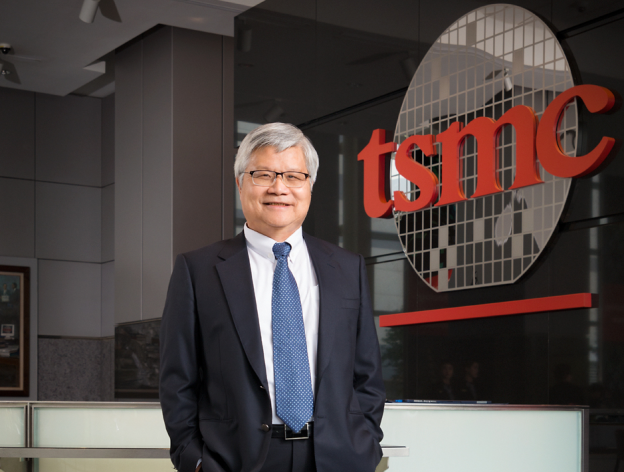
(Photo cre: TSMC)
Please note that this article cites information from Reuters, Economic Daily News and Central News Agency.