[News] Taylor Reportedly Slashes Incentives for Samsung Plant Amid Delays, Sets New Targets
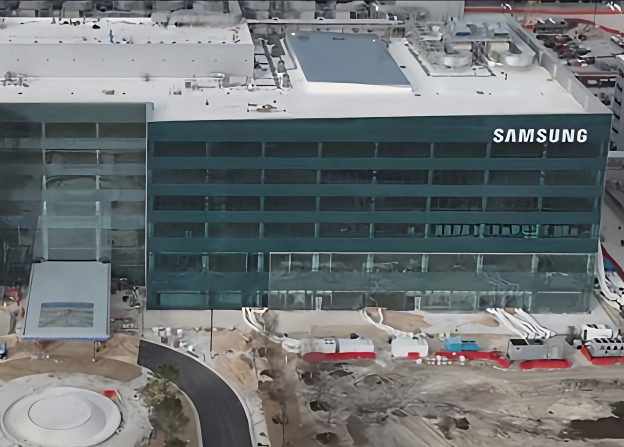
Due to repeated delays in the construction timeline of Samsung Electronics’ plant in Taylor, Texas, the city has revised its financial incentive agreement, scaling back support for the project, according to Korea JoongAng Daily. The amended deal also sets new requirements, mandating that Samsung complete 6 million square feet of building space by 2026, with an additional 1 million square feet to be added by 2028 — totaling 7 million square feet, Korea JoongAng Daily notes.
As the report highlights, the amendments announced on April 30 reduce the original incentive package — which once offered up to USD 25 million in rebates — to a maximum of USD 9 million. Even the reduced amount is contingent on Samsung meeting an equipment threshold by the end of 2026, which the city sees as a sign of its commitment to begin installing machinery and preparing for chip production by late 2026, the report notes.
In addition, the report also says that the city is taking back tax revenue from properties not directly related to chip manufacturing.
Delays and Headwinds for Samsung’s U.S. and Korean Chip Projects
Despite reduced support from Texas city, Samsung has reaffirmed its commitment to the project, stating it “remains fully committed” to starting operations by 2026, according to a Samsung Electronics spokesperson cited by Korea JoongAng Daily.
When Samsung’s Taylor investment was announced in late 2021, production was set for 2024—but the timeline has been pushed back multiple times since, according to South Korean media outlet The Elec.
Sources cited by Korea JoongAng Daily suggest that Samsung’s potential delays are driven more by overall market conditions and challenges in securing clients than by actions from the current U.S. administration.
The Taylor facility is expected to manufacture advanced 3nm and 2nm chips, with mass production slated for late 2026, according to SamMobile.
However, even though the Korean tech giant is pursuing these ambitions, it continues to face challenges at the 3nm node. As mentioned by Chosun Biz, Samsung’s 3nm yield rates remain around 50% even after three years of mass production.
In addition to potential delays to its U.S. production, Samsung has also postponed the completion of its large chip complex in Pyeongtaek, Gyeonggi Province. As noted by Korea JoongAng Daily, construction on the new P4 and P5 fabs has been paused since last year amid a market slowdown.
Read more
- [News] Samsung Faces High Tariff Risks as It Reportedly Hesitant to Bring in Chipmaking Tools for Taylor
- [News] Samsung Reportedly Dismisses Taylor Fab Delay Rumors, Confirms Operations Set to Begin in 2026
(Photo credit: Samsung)
Please note that this article cites information from Korea JoongAng Daily, The Elec, SamMobile, and Chosun Biz.