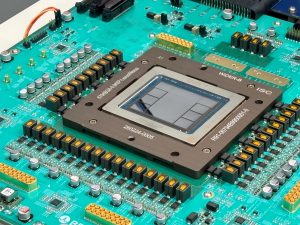
[News] Intel Tapped as Tesla Wins First 14A Customer Spot in Terafab Push
Just ahead of Intel’s April 23 earnings call, the chipmaker is poised to secure its first 14A customer. Reuters, citing Elon Musk, reports that Tesla plans to use Intel’s next-generation 14A process for chips in its Terafab AI complex in Austin.
While earlier market speculation pointed to possible collaboration on Intel’s advanced packaging technologies such as EMIB (Embedded Multi-die Interconnect Bridge), the confirmed move would mark a major breakthrough for Intel’s 14A foundry ambitions—its first significant external customer win, according to Reuters.
It is also notable that Tesla emerging as Intel’s first 14A customer comes somewhat unexpectedly, as Wccftech had previously reported that tech giants including Google, Apple, AMD and NVIDIA were expected to evaluate commitments this fall once the PDK 1.0 design kit becomes available, following an earlier PDK 0.5 release. The report also cited analysts suggesting Intel could start securing major customers by late 2026 as its 14A node gains traction.
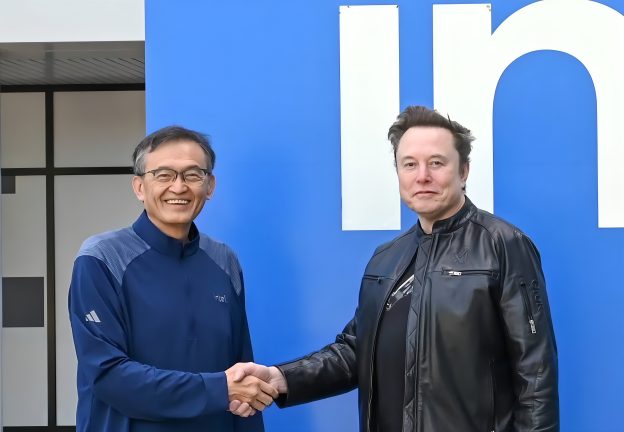
According to the transcript of Tesla’s earnings call cited by Yahoo! Finance, Elon Musk said Intel is “excited to partner with us on some of the core manufacturing technologies.” He added that Tesla plans to use Intel’s 14A process, describing it as state-of-the-art and still under development.
Musk noted that by the time the Terafab project scales up, 14A would likely be mature and ready for mass production, making it “the right move.” He also highlighted strong ties between the two companies, saying there is “great respect” for Intel’s leadership team and expressing confidence that the collaboration will be a strong partnership, according to the transcript.
Intel–Terafab Vision Faces Trillion-Dollar Scale, Execution Questions Remain
The Terafab project itself would be an enormous undertaking. Reuters, citing analysts, estimates that building the required chip infrastructure at that scale could demand between $5 trillion and $13 trillion in capital expenditure.
Nikkei reports that once fully ramped, the sprawling fabrication complex is expected to deliver up to one terawatt of AI compute annually, powering Tesla’s automotive, robotics and AI ambitions. The overall chipmaking buildout is also estimated to cost about $25 billion in construction alone, the report adds.
However, Reuters also cautions that key details of the Terafab project remain unclear, including who will fund the expensive chipmaking equipment, who will run the facilities, and when production could begin. Still, the report underscores that Elon Musk’s backing of Intel’s technology may outweigh these uncertainties, with analysts arguing that securing a customer is ultimately more critical than timing.
Citing CEO Lip-Bu Tan, Tom’s Hardware previously noted that Intel’s 14A process is expected to reach production readiness in 2027, with early versions of its process design kit (PDK) already rolling out to external customers beginning this year.
If realized, the timeline could potentially give Intel a lead over foundry heavyweight TSMC. According to Tom’s Hardware, citing TSMC’s roadmap unveiled at its North America Technology Symposium 2026, the Taiwanese chipmaker expects both A16 and N2X to arrive in 2027, followed by A14 in 2028.
Read more
- [News] Intel Foundry Said to Boost Equipment Orders by 50%+ YoY; 14A May Draw Major Customers by Year-End
- [News] Intel Reportedly to Brief Staff on TeraFab Involvement in Coming Weeks, While Key Foundry Details Remain Limited
(Photo credit: Intel)