[News] Micron Reportedly Pursues Stacked GDDR for AI Inference, Prototype Expected in 2027
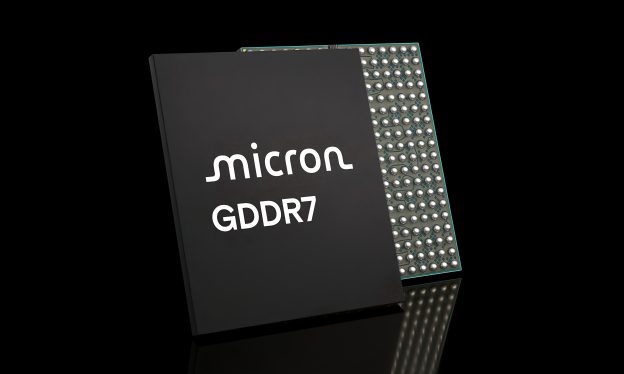
Micron is reportedly making the industry’s first attempt to stack graphics DRAM (GDDR). According to ETNews, sources indicate that the company has begun developing a new product that vertically stacks GDDR. Micron is said to be preparing the necessary equipment and plans to begin process testing in the second half of 2026. Sources cited by the report add that early designs are expected to feature roughly four stacked layers, with prototypes potentially emerging as early as 2027.
As the report notes, GDDR is optimized for video processing and 3D graphics. Traditionally used in graphics cards and gaming devices, it is now increasingly being adopted in certain AI accelerators. Although it delivers lower bandwidth than HBM, its cost advantages have supported rising demand in specific applications such as AI inference, a segment Micron is believed to be targeting.
By stacking GDDR in a manner similar to HBM, the company aims to develop a product that, while still slower than HBM, offers higher performance and greater capacity than conventional GDDR, the report adds. Demand is also expected from high-performance gaming graphics cards, a segment that continues to grow.
Global Economic notes that while stacked GDDR lags HBM in performance, its key advantages lie in cost efficiency and simpler packaging. HBM faces significant supply constraints due to the need for hundreds of through-silicon vias (TSVs) and complex interposer-based packaging such as CoWoS. By contrast, stacked GDDR can rely on less complex packaging processes, offering advantages in both cost reduction and supply scalability.
If Micron succeeds, it could establish an early foothold in the market. As ETNews notes, the company appears to see strong growth potential driven by AI expansion, suggesting a strategy to target the stacked GDDR segment ahead of Samsung Electronics and SK hynix to secure a competitive edge.
Notably, as Global Economic highlights, if stacked GDDR gains traction in the inference market, it could expose the risks of a revenue model heavily reliant on HBM. As the report explains, the inference phase of AI services requires deploying tens of thousands of servers, making the GDDR family, priced at roughly 5–10% of HBM per GB, an attractive option.
Stacked GDDR’s Key Challenges
However, as ETNews notes, stacked GDDR has so far remained largely confined to early-stage research and academic work. With no established precedent for mass production, it remains uncertain whether Micron can overcome the associated technical challenges.
Key hurdles include developing effective stacking methods between GDDR dies, as well as managing power consumption and thermal performance, ETNews notes. Cost control during the stacking process will also be critical, as the product must maintain a competitive price-to-performance ratio relative to HBM to achieve market viability.
Read more
- [News] Micron Reportedly Eyes JDI’s Mobara Plant for Chip Assembly and Testing Expansion in Japan
- [News] While DDR5 Margins Reportedly Surpass HBM: What’s Next for Memory Giants?
(Photo credit: Micron)