Popular Keywords



About TrendForce News
TrendForce News operates independently from our research team, curating key semiconductor and tech updates to support timely, informed decisions.
[News] MLCC Giant Murata Reportedly Confirms April 1 Price Hike on Key Components
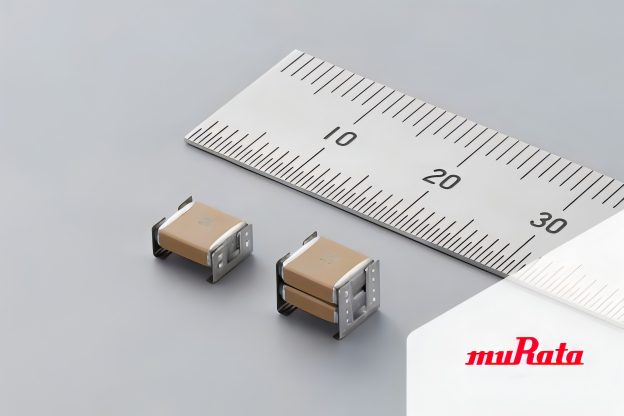
With memory and logic chip prices climbing, major players in the Multilayer Ceramic Capacitor (MLCC) market are following suit with price hikes. According to Liberty Times, citing a company client notice, Japan’s Murata Manufacturing—the world’s largest maker of passive components—has officially announced price adjustments across four product categories, set to take effect on April 1, 2026.
According to the report, Murata said the price adjustments will cover Multilayer-type Chip Ferrite Beads, Multilayer-type Ferrite Power Inductors, Multilayer-type RF Inductors, and Multilayer-type Common Mode Choke Coils. The company pointed to silver as the main driver, highlighting its widespread use across industrial applications—including solar panels, electric vehicles, semiconductors, AI devices, and medical equipment—where demand has surged in recent years.
Earlier in February, Bloomberg, citing President Norio Nakajima, reported that Murata had begun serious discussions about a potential price increase, with the decision likely to come up by March. Liberty Times adds that Samsung Electro-Mechanics is also reported to be initiating its first round of price hikes in April.
The Elec reported in late February that If Murata moves forward with the price hikes, industry watchers expect Taiwanese and Chinese manufacturers, along with Samsung Electro-Mechanics, to follow suit. Liberty Times points to Taiwan’s Yageo and Walsin Technology as the top beneficiaries poised to gain from this surge.
With MLCC demand running high, a double-digit increase is anticipated in the second quarter, The Elec noted.
For context, The Elec explains that a typical smartphone contains over 1,000 MLCCs, while AI server boards use ten to twenty times that amount—and future AI servers are projected to push those numbers even higher.
According to TrendForce, demand for high-end MLCCs remains strong due to substantial investments in AI infrastructure, such as Nvidia’s GB200/300 servers, and aggressive ASIC development by leading CSPs, including AWS and Google. This has resulted in high-capacity utilization at Japanese and Korean suppliers, with Murata, SEMCO, and Taiyo Yuden all operating above 80%. Murata, especially, benefits from controlling critical materials for advanced packaging and anticipates a 20–25% QoQ increase in high-end MLCC orders in 1Q26, ensuring their production lines stay fully utilized.
Read more
- MLCC Market Polarizes in 1Q26 as Embodied AI Ignites High-End Demand While Consumer Electronics Slump Under Cost Pressures, Says TrendForce
- [News] Samsung Electro-Mechanics Reportedly Weighs Double-Digit MLCC Price Hike in April Amid AI Demand
(Photo credit: Murata)
Please note that this article cites information from Liberty Times, Bloomberg, and The Elec.