Popular Keywords



About TrendForce News
TrendForce News operates independently from our research team, curating key semiconductor and tech updates to support timely, informed decisions.
[News] China Pushes Advanced Photoresist as Xuzhou B&C Targets KrF and ArF; Mass Production in 5 Years
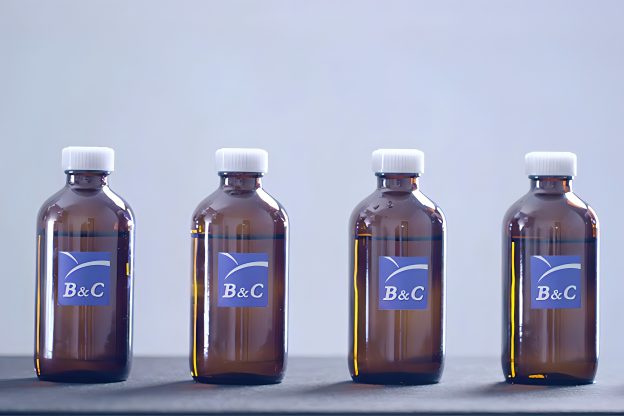
China’s semiconductor push is gaining momentum, with the country now reportedly setting its sights on key chip materials, including photoresist. According to South China Morning Post, domestic supplier Xuzhou B&C Chemical aims to mass-produce several core photoresist materials for advanced nodes within five years. Fu Zhiwei, chairman of Xuzhou B&C Chemical, said the company is targeting breakthroughs in KrF and ArF while mobilizing core resources to advance high-end photoresists for leading-edge nodes. The report notes that KrF, ArF, and EUV represent the most advanced photoresist technologies.
Notably, Fu said the company’s mid- to high-end KrF and ArF products have already passed verification at leading foundries and are now beginning to scale. Finance WUJI also notes that China’s share in KrF and ArF remains below 1%, while more advanced EUV photoresists are still in the R&D stage.
As highlighted by Finance WUJI, Huawei-linked Hubble Investment injected RMB 300 million into Xuzhou B&C in 2021. Since 2006, the company has built a fully integrated value chain spanning monomers, resins, photoacids, and finished photoresist products. In 2012, it became the only non-domestic supplier to Japanese photoresist leader JSR, and in 2024, it achieved a breakthrough in 14nm wet-process photoresist technology.
Alongside Xuzhou B&C Chemical, Nata Opto-electronic Material said in February it has 50 tonnes of annual ArF photoresist capacity and can maintain stable supply for early orders, South China Morning Post adds.
High-End Photoresist Market Still Dominated by Japan and U.S. Suppliers
South China Morning Post notes that photoresist is a critical material in chipmaking, used in photolithography and photoengraving to create patterned surface coatings. It is classified by exposure wavelength, including broadband UV, G-line, I-line, KrF, ArF, EUV, and electron beam. China has achieved over 20% self-sufficiency in older G-line and I-line photoresists used for power chips and LEDs, but the high-end segment remains dominated by Japanese and U.S. players, the report adds.
Finance WUJI adds that five major suppliers—JSR, TOK, DuPont, Shin-Etsu Chemical, and Fujifilm—have long dominated about 85% of the global market, with the four Japanese players accounting for over 70%. In the EUV segment, only JSR, TOK, and Shin-Etsu Chemical currently have mass production capabilities.
Iran Crisis Raises Risks to Photoresist Supply Chain
Meanwhile, the recent Iran crisis is also said to be disrupting photoresist supply. According to Business Korea, reduced access to Middle Eastern naphtha has sharply curtailed ethylene production, which depends on naphtha as a feedstock. In semiconductor manufacturing, ethylene is used in photoresist coatings for wafer patterning as well as in cleaning agents. As noted by Business Korea, a semiconductor industry official said ethylene supply and demand have not yet been significantly affected, but warned that prolonged disruptions could impact production, with the situation under close monitoring.
Read more
- [News] China’s Chip Materials Drive Intensifies as Photoresist Leader Red Avenue Seeks Hong Kong IPO
- [News] China Photoresist Maker Hengkun Goes Public on STAR Market with YMTC-Tied Fund
(Photo credit: Xuzhou B&C Chemical)
Please note that this article cites information from South China Morning Post, Finance WUJI, and Business Korea.