Popular Keywords



About TrendForce News
TrendForce News operates independently from our research team, curating key semiconductor and tech updates to support timely, informed decisions.
[News] Tiny “Mouse Bites” in Transistors Mapped by Cornell, ASM & TSMC Using Electron Microscopy
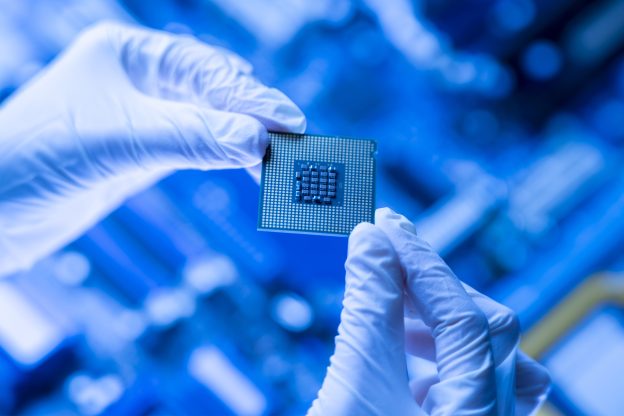
As chip manufacturing approaches the sub-2nm era, spotting atomic flaws in next-generation silicon grows ever more challenging. Now, Cornell researchers, partnering with foundry giant TSMC and chipmaking tool player ASM, have for the first time directly visualized atomic-scale defects using high-resolution 3D imaging, revealing tiny “mouse bites” in the transistor channels, according to SciTechDaily and Cornell Chronicle.
Published February 23 in Nature Communications, the study addresses a growing challenge in modern chip design. As the reports note, while today’s high-performance processors pack billions of transistors, troubleshooting faults is becoming increasingly difficult as components shrink— with each transistor channel now measuring just 15 to 18 atoms wide.
As the reports highlight, fabricating modern chips involves hundreds—if not thousands—of steps, from etching and deposition to thermal processing, with each stage shaping the final structure. Previously, engineers largely relied on projected images to infer what was happening. With the team’s breakthrough, however, the structure can now be directly observed after each step, revealing precisely how adjustments—such as temperature changes—affect the device.
Electron Microscope Pixel Array Detector (EMPAD) Plays a Key Role
The reports note that electron ptychography—a computational imaging technique—plays a key role. The method reportedly uses an electron microscope pixel array detector (EMPAD) to capture detailed electron scattering patterns as they pass through transistors, allowing researchers to reconstruct their structures with exceptional clarity.
Notably, the detector, according to the reports, is so precise that it has produced the world’s highest-resolution images, revealing atoms in unprecedented detail, a feat recognized by Guinness World Records.
By analyzing the data, the team tracked individual atoms and uncovered subtle irregularities along transistor channels, dubbed “mouse bites,” the reports point out. These tiny defects formed during the optimized growth process, with test samples produced at Imec’s nanoelectronics research center, the reports add.
With few other ways to directly visualize atomic-scale defects, the technique could become a critical tool for chip debugging and failure analysis—particularly during development, the reports note, citing project leader David Muller, the Samuel B. Eckert Professor of Engineering at Cornell’s Duffield College of Engineering.
Interestingly, David Muller and Glen Wilk, now VP of Technology at ASM, were once colleagues at Bell Labs in the early 2000s, the reports note. The study’s co-authors also include Steven Zeltmann from the Platform for the Accelerated Realization, Analysis and Discovery of Interface Materials (PARADIM), as well as Ta-Kun Chen and Vincent Hou of TSMC.
Read more
(Photo credit: FREEPIK)
Please note that this article cites information from SciTechDaily, Cornell Chronicle, and Nature Communications.