Popular Keywords



About TrendForce News
TrendForce News operates independently from our research team, curating key semiconductor and tech updates to support timely, informed decisions.
[News] China Reportedly Aims to Boost 7nm, 5nm Output Fivefold in Two Years, Driven by SMIC, Hua Hong
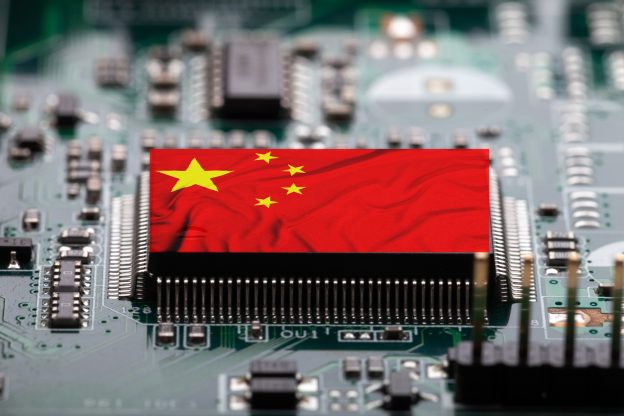
China is reportedly stepping up efforts to expand advanced chip manufacturing despite continuing U.S. restrictions. According to Nikkei, sources say the country aims to increase output of relatively advanced chips—including production at the 7nm and potentially 5nm performance levels—to 100,000 wafers within one to two years, up from fewer than 20,000 currently. Some sources add that Beijing has set a more ambitious target of adding another 500,000 wafers of capacity by 2030.
The report notes that this nationwide push to expand advanced chip output is intended to meet growing domestic demand for AI computing infrastructure, with SMIC, Hua Hong, and several Huawei-linked chipmakers ramping up capacity as part of the effort.
However, it remains uncertain whether production can scale to that extent, as U.S. export controls have constrained China’s access to advanced chipmaking equipment, the report notes.
Key Players Driving China’s Chip Ambitions
SMIC is spearheading China’s advanced chip push, having produced 7nm chips using less advanced equipment and now developing what some describe as “5-nanometer-like” technology, the report notes. Meanwhile, Hua Hong Semiconductor, previously focused on mature nodes, has joined the move into advanced production as central and local governments press key chipmakers to expand domestic output, the report states.
Huawei plays an important role in scaling up production across multiple chip categories, including advanced logic devices and key power-related components. The company is planning to launch multiple Ascend chipsets in 2026, including the Ascend 950PR and Ascend 950DT, the report adds. As highlighted by Mydrivers, a key feature of the 950 chip is Huawei’s self-developed HBM, along with support for low-precision data formats, stronger vector performance, and a 2.5-fold boost in interconnect bandwidth.
In addition, several Huawei-linked chipmakers in southern China are preparing to manufacture advanced-node chips to support the development of an AI data center ecosystem. The report notes that one such firm, PengXinWei, has become a key R&D base for Huawei’s chip development and pilot production lines. Another company, Dongguan Guangmao Technologies, is targeting production of chips more advanced than 10nm.
Meanwhile, JHICC, a memory chipmaker placed on the U.S. blacklist, has emerged as an important test base where domestic firms can trial new chipmaking equipment and materials on an operational production line, the report adds.
Domestic Backing Fuels Rise of China’s Chipmakers
Beijing’s strong backing of local AI chip developers is helping to accelerate China’s advanced logic chip production. Chinese chip designers have increasingly partnered with domestic manufacturers to bring their products to market. This shift has created significant opportunities for China’s leading foundries. According to TrendForce, SMIC ranked third globally in 3Q25 foundry revenue, trailing only TSMC and Samsung. Hua Hong placed seventh, moving into the ranks of major international players such as GlobalFoundries and UMC.
Read more
- [News] SMIC Posts Record $9.3B in 2025 Sales; 7nm Yields Reportedly Weigh on Margins
- [Insights] Cambricon Remains China’s Top AI Chip Startup; Rumored 2026 Triple Output Faces SMIC Limits
(Photo credit: FREEPIK)