Popular Keywords



About TrendForce News
TrendForce News operates independently from our research team, curating key semiconductor and tech updates to support timely, informed decisions.
[News] Apple Reportedly Plans Entry-Level MacBook; Services, In-House Chips Cushion Memory Costs
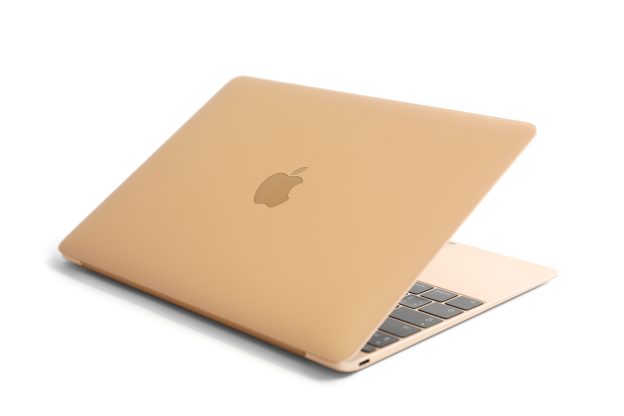
Despite rising memory prices, Apple reportedly still plans to launch an entry-level MacBook. According to Mirror Daily, sources say the device will, for the first time, adopt an iPhone-class processor and be equipped with just 8GB of DRAM—half the 16GB used in current MacBook Air and MacBook Pro models. However, operating smoothness may not be significantly affected. The report adds that the laptop will also support Apple’s AI assistant, Apple Intelligence.
Mirror Daily notes that the device could be priced below US$799, and that Apple is highly confident in the sales prospects of this first low-cost entry-level laptop. Industry sources say Apple expects annual shipments of the product to reach 5–8 million units, equivalent to roughly 20–30% of its Mac sales last year. The report highlights that Quanta is set to secure more than half of the orders, while Apple’s long-time manufacturing partner Foxconn will take the remainder.
How Apple Mitigates Memory Supply and Cost Risks
On the supply front, sources indicate that Apple has signed new DRAM and NAND supply agreements with memory manufacturers including Samsung Electronics, SK hynix, and Kioxia. The contracts are expected to secure supply through at least the first half of 2026. With the supply problems largely resolved, the report suggests that the impact of sharply higher memory prices on Apple’s financial results may be relatively limited.
Meanwhile, the report notes that Apple benefits from a highly integrated design that allows for more efficient and flexible memory use. By contrast, Wintel laptops, based on Windows software and Intel hardware, rely on an open architecture in which the operating system and hardware come from different vendors, limiting software–hardware integration and requiring additional memory headroom.
Services Growth and In-House Silicon Reportedly Offset Memory Costs
Rising memory costs may have limited impact on Apple, the report says, as the company’s high-margin Services business continues to expand. Services—which include iCloud, Apple Pay, Apple Music, Apple TV+, and the App Store—carry gross margins of 70–80% and accounted for 26.2% of revenue in fiscal 2025, up from 24.5% in 2024, 22.2% in 2023, and 19.8% in 2022, providing growing profitability to cushion memory price pressure.
In addition, the report notes that beyond memory, Apple designs its other key chips in house—including the M series processors for laptops, A series processors for iPhones, S series Bluetooth chips, and C series 5G modem chips—and deploys them at volumes large enough to achieve economies of scale, resulting in significant cost savings for the company.
Read more
- [News] Apple May Prioritize High-End iPhones in 2H26 as Memory Costs Rise; Flags TSMC 3nm Tightness
- [News] Samsung May Raise iPhone LPDDR Prices by Over 80% QoQ; SK hynix Reportedly Near-100% Increase
(Photo credit: FREEPIK)
Please note that this article cites information from Mirror Daily.