Popular Keywords



About TrendForce News
TrendForce News operates independently from our research team, curating key semiconductor and tech updates to support timely, informed decisions.
[News] Intel May License Super MIM to UMC, Boosting AI and Advanced Packaging Capability

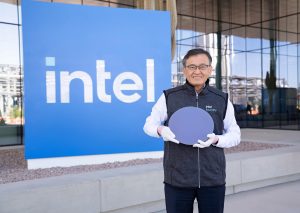
Intel and UMC are reportedly exploring a deeper partnership aimed at supporting AI-related applications. According to Economic Daily News, sources say Intel plans to license its proprietary “Super MIM” capacitor technology to UMC, a technology used in Intel’s next-generation angstrom-class processes and regarded as critical to advanced packaging.
Sources cited by the report say Intel may bring its Super MIM capacitor technology to the 12 nm/14 nm process platforms used in its collaboration with UMC, and extend the technology to advanced-packaging-related applications.
Addressing market speculation, UMC said its current cooperation with Intel remains focused on the 12 nm platform, but the report adds that the company does not rule out expanding the scope of collaboration in the future to include a broader range of technologies.
As the report notes, if UMC were to secure the relevant licenses from Intel and successfully adopt Intel’s Super MIM capacitor technology, it would provide UMC with a key advanced power module capability, enabling entry into high value–added applications such as AI accelerators, high-performance computing, and power layers for advanced packaging, a development that would be strategically significant for UMC’s overall technology platform and customer mix.
Inside Intel’s Super MIM Power Technology
Intel’s Super MIM is a key technology underpinning the company’s push into angstrom-class processes. The report states that this capacitor technology addresses power noise and transient power fluctuation challenges in advanced nodes and is widely regarded as Intel’s “secret weapon” for moving into next-generation process technologies.
As transistor dimensions continue to shrink, the report notes that chips face sharp spikes in instantaneous current demand during high-load computing. Traditional decoupling capacitors, constrained by limited capacitance density or excessive leakage current, are increasingly unable to support the stable operation of angstrom-class chips.
Against this backdrop, the report highlights that Super MIM can deliver instantaneous current support directly on-chip, suppress voltage droop and power noise, and is regarded as one of the key power foundation modules determining whether angstrom-class processes such as 18A can achieve mass production.
At the materials level, the report adds that Intel’s Super MIM capacitor uses stacked materials, including ferroelectric hafnium–zirconium oxide (HZO), titanium oxide (TiO), and strontium titanate (STO), to significantly increase capacitance density per unit area and substantially reduce leakage, while remaining compatible with existing back end of line (BEOL) processes.
Read more
- [News] Supply Constraints Hit Intel Q1 Forecast; 14A Customer Demand Expected 2H26–1H27
- [News] 8-Inch Foundries May Raise Prices 5–20%, Benefiting UMC, PSMC, Vanguard
- [News] UMC Reportedly Mulls Rejoining Advanced Node Race via Rumored Intel 6nm Tie-Up
(Photo credit: UMC)
Please note that this article cites information from Economic Daily News.