Popular Keywords



About TrendForce News
TrendForce News operates independently from our research team, curating key semiconductor and tech updates to support timely, informed decisions.
[News] Vietnam Breaks Ground on First Domestic Chip Plant, Reportedly Aims Trial Production by 2027
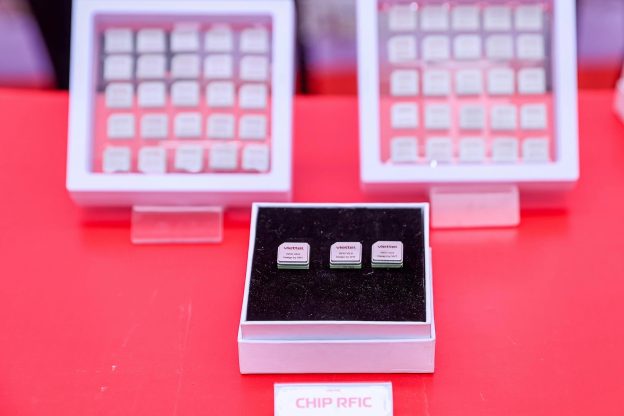
Long known as a hub for electronics assembly, Vietnam has so far lacked upstream chip manufacturing. However, this is beginning to shift. On January 16, military-run Viettel Group broke ground on the country’s first domestic semiconductor plant, marking a major step toward a self-sufficient chip industry, according to Vietnam Government News.
Citing Viettel’s chairman and CEO, Lieutenant General Tao Duc Thang, Vietnam Government News notes that construction, technology transfer, and trial production are expected to wrap up by the end of 2027. Between 2028 and 2030, the group aims to optimize processes and elevate production efficiency to meet international standards.
Situated on a 27-hectare site within Hoa Lac High-Tech Park, the facility will serve as a national hub for semiconductor research, design, testing, and manufacturing, the report suggests, adding that the plant is expected to supply chips across a wide range of sectors, including aerospace, telecommunications, IoT, automotive, medical devices, and industrial automation.
Vietnam as a Tech Manufacturing Hub
As highlighted by ijiwei, over the past decade, Vietnam has emerged as a key manufacturing hub for tech giants like Samsung and Foxconn, with hardware exports reaching $132 billion in 2024. Notably, according to Asean Express, about half of Samsung Electronics’ Galaxy smartphones and tablets are produced in Vietnam and exported to 128 countries, including the U.S., Europe, Russia, and Southeast Asia. Samsung is also the largest foreign investor in the country, the report says.
Yet, the government recognizes that relying solely on low-end assembly is not a sustainable path. Ijiwei reports that Prime Minister Pham Minh Chinh has approved the National Development Strategy for 2030 and Vision 2050, aiming to establish 100 chip design firms, one wafer fab, and 10 packaging and testing facilities by 2030. The plan reportedly targets industry revenues exceeding $25 billion, signaling a bold shift toward a self-sufficient semiconductor ecosystem.
However, despite the milestone of starting construction on the country’s first fab, ijiwei notes that Vietnam still faces significant hurdles, including low domestic self-sufficiency, a shortage of skilled talent, and power stability issues.
Read more
- [News] Google Reportedly to Develop High-End Pixel Phones From Scratch in Vietnam Amid China Diversification
- [News] Coherent Opened up a New SiC Fab in Vietnam
(Photo credit: Viettel’s Facebook)
Please note that this article cites information from Vietnam Government News, ijiwei and Asean Express.