Popular Keywords



About TrendForce News
TrendForce News operates independently from our research team, curating key semiconductor and tech updates to support timely, informed decisions.
[News] Samsung Reportedly Cuts Fold Crease 20% With Ultra-Thin Glass; Galaxy Z Fold 8, Apple May Adopt
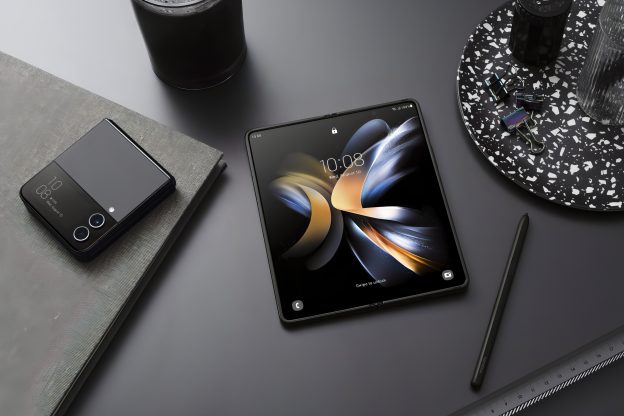
Samsung is working to address one of the key pain points of foldable smartphones: visible screen creases. According to DealSite, Samsung Display showcased foldable OLED technology at CES 2026 in which creases are barely noticeable. The panel is said to be a strong candidate for adoption in Samsung Electronics’ next-generation foldable smartphone slated for release in the second half of 2026.
Industry sources suggest that Samsung Display may reduce visible creasing by incorporating ultra-thin glass (UTG) beneath the panel. As highlighted in the report, the company says the next-generation display delivers roughly a 20% reduction in crease depth compared with the current Galaxy Z Fold 7.
The report also notes that while Samsung Display is expected to serve as the sole panel supplier for the initial production run of Apple’s foldable iPhone, industry sources anticipate technical differences between the panels supplied to Apple and those provided to Samsung Electronics.
Analysts cited by the report believe Samsung Display’s shift from a single-layer to a dual-layer ultra-thin glass (UTG) structure could be applied to the panels it is set to supply for Apple’s foldable iPhone. However, the report also notes that panels supplied to Samsung Electronics and Apple are expected to differ, as Apple’s patents alone are unlikely to enable a fully crease-free design.
Samsung Reviews Dual-UTG and Backplate Design Options
It has yet to be confirmed whether Samsung Electronics will adopt the same dual-UTG configuration. Industry sources believe the company is likely evaluating the structure, as UTG is a glass-based material that is relatively low-cost compared with alternative options. Its technological maturity also helps limit costs relative to introducing entirely new materials.
In addition, while the specific technologies have not been disclosed, the report points to the possibility that Samsung Display may have applied a laser-drilling process to the OLED-supporting backplate to help disperse mechanical stress. The report adds that functionality appears to have been improved by creating numerous micro-holes in the backplate through laser drilling to distribute stress more evenly.
Read more
- Standardized Hinges and Apple’s Entry Expected to Push Foldable Phone Penetration Beyond 3% by 2027, Says TrendForce
- [News] Samsung Reportedly Preps 4:3 “Wide Fold” Phone to Take On Apple, Launch Set for Fall 2026
(Photo credit: Samsung)
Please note that this article cites information from DealSite.