Popular Keywords



About TrendForce News
TrendForce News operates independently from our research team, curating key semiconductor and tech updates to support timely, informed decisions.
[News] China Diversification Reportedly Lifts Mature-Node Foundries UMC, VIS, PSMC Despite Tariff Delay
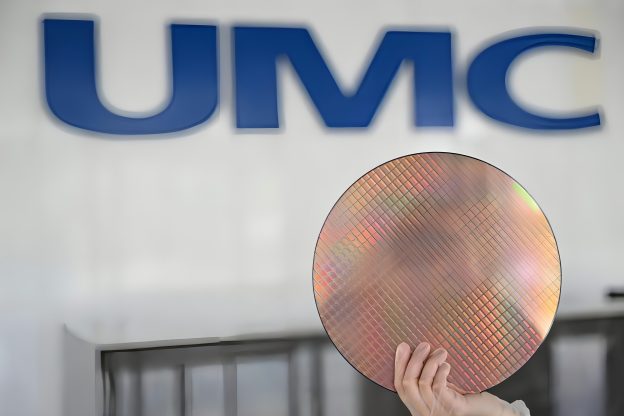
Although the U.S. has delayed the implementation of China chip tariffs, supply chains continue to shift away from China over the long term. According to Commercial Times, mature-node chips—given their broad range of applications and long product life cycles—are among the first to be incorporated into geographic diversification and second-source planning. Taiwanese foundries such as UMC, VIS, and PSMC are therefore expected to be key beneficiaries of order shifts.
Industry sources cited by the report indicate that in the automotive, industrial control, and power management sectors, international IDMs and system makers have already incorporated non-China supply sourcing strategies into their product and procurement plans for 2025–2027, aiming to mitigate the impact of future policy uncertainties on costs and delivery timelines.
UMC Emerges as a Key Beneficiary of Mature-Node Supply Shifts
Against this backdrop, Taiwan’s mature-node foundries have once again come under market scrutiny. As the report highlights, Taiwan’s second-largest foundry, UMC, is positioned to benefit. The report points out that UMC continues to advance the expansion of its 12-inch fab in Singapore, which is expected to enter mass production in 2026. The Singapore capacity offers a “non-China, non-U.S.” geopolitical advantage aligned with customers’ supply-chain diversification efforts and has already been incorporated into the mid- to long-term planning of some clients.
Notably, according to TrendForce, in 3Q25, UMC ranked fourth in global foundry revenue. Modest restocking in mature-node processes lifted overall utilization, driving revenue up 3.8% QoQ to nearly US$1.98 billion and giving UMC a 4.2% market share.
VIS Positioned to Gain From Non-China Supply Chain Shifts
TSMC’s affiliate, VIS, has also drawn market attention. As the report notes, VIS focuses on 8-inch and 12-inch mature-node manufacturing, with products spanning automotive, industrial control, and consumer electronics applications, and is working with international IDMs to advance the VSMC project in Singapore. Industry sources state that as customers increasingly demand non-China supply sources, VIS’s overseas capacity expansion is strengthening its strategic position in the mature-node foundry market.
PSMC Faces Opportunity in Mature-Node Supply Shifts
As for PSMC, the report indicates that while its operating structure differs from that of the aforementioned peers, it still has room to capture demand driven by supply-chain diversification in specific process technologies and targeted applications. As the report highlights, the market’s focus is on whether adjustments to its process platforms and customer mix will allow it to penetrate applications—such as automotive and industrial control—where demand for non-China sourcing is particularly strong.
Separately, PSMC is also expected to benefit from its strength in memory-related technologies. According to Economic Daily News, NVIDIA has teamed up with AI startup Groq to accelerate the development of SRAM-based language processing units (LPUs). The report adds that PSMC controls key SRAM manufacturing capacity and is securing orders from major SRAM design houses, positioning it as a major beneficiary of this trend.
Read more
- [News] Micron, SanDisk Reportedly Turn to PSMC to Fast-Track Memory Output Amid Tight Supply
- [News] UMC Licenses imec’s iSiPP300 to Advance Silicon Photonics, Eyes 2026–27 Risk Production
(Photo credit: UMC)
Please note that this article cites information from Commercial Times and Economic Daily News.