Popular Keywords



About TrendForce News
TrendForce News operates independently from our research team, curating key semiconductor and tech updates to support timely, informed decisions.
[News] 7.0 Quake Hits: TSMC Nears Full Production, Sector Losses Reportedly Tens of Billions NTD
Just before year-end, a magnitude-7.0 earthquake struck Taiwan at 11:05 p.m. on the 27th, with the epicenter off Yilan and seismic intensity reaching level four in Hsinchu City and County — heightening concerns over potential disruption to foundries and memory makers.
Commercial Times, citing TSMC, reports that a small number of fabs in the Hsinchu Science Park were evacuated after shaking reached preset safety thresholds. Supply-chain sources cited by the report added that TSMC’s production could return to near-full levels as early as the 29th, with only limited impact on full-year output and customer delivery schedules.
According to Liberty Times, total losses across the semiconductor sector could reach tens of billions of New Taiwan dollars. However, the report also notes that compared with the April 3 quake — which led TSMC to record around NTD 3 billion (USD 92.1 million) in earthquake-related losses after insurance — this event caused less severe damage due to its deeper focus. With Taiwan’s semiconductor sector able to mobilize rapidly, production is expected to resume within days, and widespread earthquake insurance should keep overall losses manageable, the report adds.
Meanwhile, according to Liberty Times, industry sources cited by the report estimate that total losses across the semiconductor sector could reach tens of billions of New Taiwan dollars.
TSMC’s Advanced Capacity in Focus
Liberty Times explains that TSMC’s 2nm, 3nm, and 5nm advanced nodes are mainly located in the Southern Taiwan Science Park and Kaohsiung, where seismic intensity from this quake was only level two to three and production was not affected.
By contrast, some of TSMC’s 12-inch fabs in central Taiwan and Hsinchu Science Park, as per Liberty Times, reportedly suffered damage to quartz furnace tubes, quartz boats, and in-process wafers, with sensitive tools taken offline for recalibration.
Analysts cited by Liberty Times note that TSMC’s key Hsinchu production lines include its 7nm and 5nm nodes, while Fab 20 in Baoshan is responsible for 2-nm mass production. While some tools may require recalibration, and a limited number of in-process wafers could be scrapped or held for inspection, the overall impact is expected to remain manageable, the report suggests.
Other foundries reported similar situations. According to Commercial Times, UMC said its 12-inch fabs in the Southern Taiwan Science Park saw limited impact, while its 8-inch Hsinchu fab has low capacity utilization. TSMC affiliate Vanguard International Semiconductor, on the other hand, confirmed all staff are safe and said fabs are recalibrating offline tools to resume production as quickly as possible, the report notes.
Memory Makers Assess Quake Damage
Liberty Times reports that a major memory fab in Taoyuan, northern Taiwan, sustained significant damage to quartz furnace tubes, causing broken or scrapped wafers. Sensitive tools also need recalibration, and debris must be cleared, with full production expected to take at least three to five days to resume. It remains unclear whether this will worsen the already tight memory supply, while fabs in central and southern Taiwan were less affected, the report notes.
PSMC acknowledged that its 8-inch and 12-inch fabs in Hsinchu and Zhunan were impacted, though to a lesser degree than during the April 3 quake, the report adds.
Read more
- [News] TSMC Dismisses Nanjing Risks as VEU Expires, Flags Global Advanced Capacity for Chinese Clients
- [News] Japan Earthquake Impact: TEL and Rapidus Unharmed, Spotlight Turns to Kioxia Kitakami Fabs
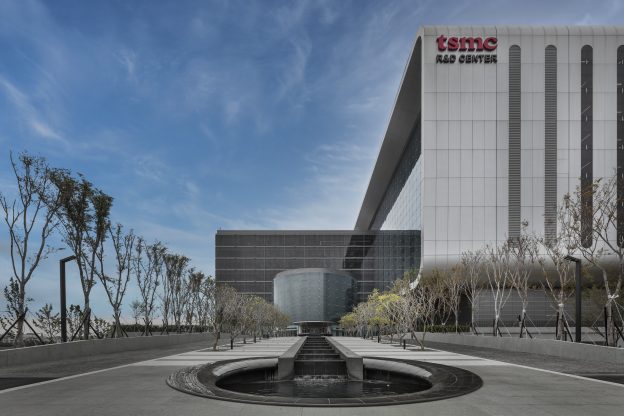
(Photo credit: TSMC)
Please note that this article cites information from Commercial Times and Liberty Times.