Popular Keywords



About TrendForce News
TrendForce News operates independently from our research team, curating key semiconductor and tech updates to support timely, informed decisions.
[News] TSMC Dismisses Nanjing Risks as VEU Expires, Flags Global Advanced Capacity for Chinese Clients
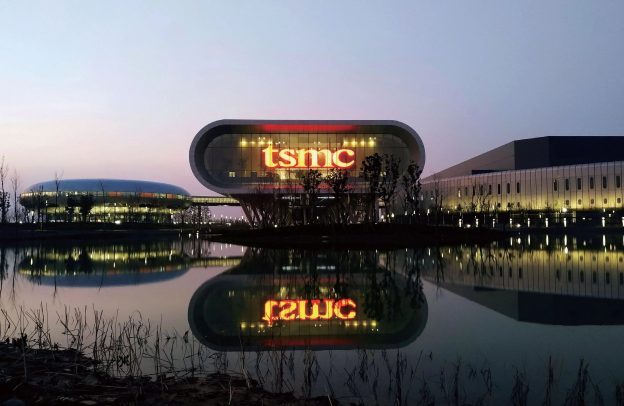
With TSMC’s Nanjing fab VEU (Validated End-User) status set to expire on December 31, 2025, the company has clarified its position. According to MyDrivers and ijiwei, TSMC China President Roger Luo said supply chains remain secure and dismissed lingering concerns that the country’s clients are limited by the plant’s capacity.
The market, however, is particularly focused on whether VEU restrictions could permanently cap Nanjing’s 16nm and 28nm output, potentially impacting deliveries. Luo, as per the reports, emphasized that as long as regulatory requirements are met, China’s clients can access advanced processes across TSMC’s global network, not just the Nanjing fab’s 16nm or 28nm lines, demonstrating the company’s operational flexibility.
Notably, MyDrivers cites Xiaomi’s 3nm XRING O1 chip as proof that Chinese companies can access TSMC’s advanced-node capacity worldwide, reinforcing the executive’s remarks.
Meanwhile, Luo reportedly added that TSMC is coordinating with suppliers to secure approvals for materials and equipment case by case. While compliance has become stricter, the process remains manageable, and Nanjing fab operations and supply chains continue running normally, the reports note.
Taiwan’s Ministry of Economic Affairs noted, via Commercial Times, that the Nanjing facility accounts for roughly 3% of the company’s global foundry capacity. A previous Economic Daily News report suggested that the fab runs about 20,000 wafers per month at 16/12nm and 40,000 wafers per month at 28/22nm, largely serving specialty demand such as automotive chips.
Samsung and SK hynix Face Risk as VEU Expires
TSMC is not alone in facing VEU expiration. In August, the U.S. Commerce Department abruptly revoked the blanket VEU authorization for Samsung and SK hynix’s China fabs. When the 120-day grace period ends on December 31, both companies must obtain U.S. approval for equipment shipments starting January 1.
According to Global Economic, while TSMC shows confidence in Nanjing fab’s stability, Korean chipmakers are pivoting from expansion to survival in China. A market expert cited by the report noted they are now prioritizing yields on legacy processes over fab upgrades. Starting next year, with every piece of equipment requiring U.S. approval, the fight will center on maintaining utilization rates, the report adds.

Read more
- [News] U.S. Revokes China Chipmaking Tool Licenses for Samsung, SK hynix: Decoding Market Impact
- [News] US to End TSMC Nanjing Waiver by End-2025: Decoding the Impact on the Foundry and Supply Chain
- [News] If US Revokes Chip Tool Exemptions: Unpacking TSMC, Samsung, and SK hynix’s China Operations
(Photo credit: TSMC)
Please note that this article cites information from MyDrivers, ijiwei, Commercial Times, Economic Daily News, and Global Economic.