Popular Keywords



About TrendForce News
TrendForce News operates independently from our research team, curating key semiconductor and tech updates to support timely, informed decisions.
[News] South Korea to Pour KRW 700 Trillion in Future Chip Industry
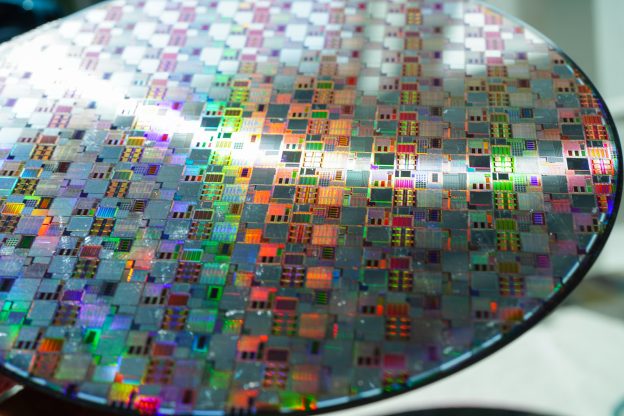
Recently, South Korea has announced plans to invest KRW 700 trillion (about USD 534 billion) to bolster the development of its semiconductor industry.
The country aims to expand the massive semiconductor cluster under construction in Yongin, Gyeonggi Province, transforming it into a global hub for AI-driven innovation. Also, South Korea will accelerate R&D in next-generation semiconductor technologies, spanning AI chips, memory solutions, advanced packaging, and compound semiconductors.
Specifically, South Korea will respectively invest KRW 215.9 billion, KRW 1.2676 trillion, KRW 360.6 billion and KRW 260.1 billion in next-generation memory by 2032, in AI-specific semiconductors by 2030, in advanced packaging by 2031, and in compound semiconductor development by 2031.
Industry observers note that South Korea, long a dominant force in global memory industry, faces intensifying competition as countries worldwide launch incentives to grow their domestic semiconductor ecosystems.
Meanwhile, driven by the AI boom, the global chip industry is shifting from traditional memory toward AI chips, compound semiconductors, and advanced packaging. To maintain its semiconductor edge and unlock new growth opportunities, South Korea must embrace AI and aggressively pursue next-generation technologies.
Among next generation technologies, compound semiconductors are widely adopted in new-energy systems and 5G communications, while advanced packaging has emerged as a critical pathway to enhance chip performance and reduce manufacturing costs. The country’s investment strategy addresses immediate market needs while laying the groundwork for the next 10–20 years of industrial development.
In compound semiconductor market, South Korea has already established a robust ecosystem—covering key materials such as silicon carbide (SiC) and gallium nitride (GaN)—supported by long-term government policy and continuous investment from major industry players.
In November, SK keyfoundry announced it had completed the acquisition of SK Powertech. Presently, it is accelerating SiC power semiconductor development, with the goal of introducing 1200V SiC MOSFET process technology by the end of 2025 and begin SiC power semiconductor foundry operations in the first half of 2026.
SK Powertech, formerly YesPowerTechnics, was acquired by SK Inc. in May 2022. The company possesses core SiC unit-process technologies and mass-production capabilities, enabling stable manufacturing and development of SiC power devices widely used in EVs, solar inverters, home appliances, industrial drives, and smart grid applications
South Korea is also making progress in super wide bandgap semiconductor materials such as gallium oxide (Ga₂O₃). Media reports show that PowerCubeSemi, a South Korean company specializing in compound semiconductors based on silicon (Si), SiC, and Ga₂O₃, plans to go public in 2026. Founded in 2013, PowerCubeSemi operates the world’s first dedicated Ga₂O₃ wafer fab for mass production and has secured KRW 6 billion in pre-IPO financing.
Industry analysts pointed out that PowerCubeSemi’s Ga₂O₃ production capabilities can strengthen South Korea’s position in future semiconductor materials and complement the nation’s ongoing investments in SiC, GaN, and AI-centric chip infrastructure.
(Photo credit: FREEPIK)