Popular Keywords



About TrendForce News
TrendForce News operates independently from our research team, curating key semiconductor and tech updates to support timely, informed decisions.
[News] South Korea’s HBM Lead Reportedly Under Strain as TSMC and Adeia Dominate Hybrid Bonding IP
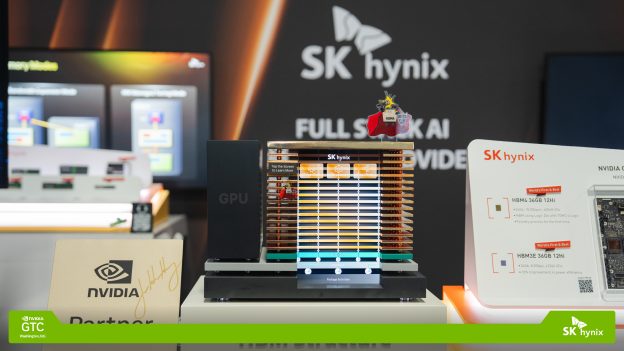
South Korean leaders Samsung and SK hynix dominate the HBM space, but there is one area where their position appears less secure. According to The Elec, a new analysis from the Korea Institute of Intellectual Property Promotion (KIPRO) finds that most key patents for HBM-related advanced packaging technologies, including hybrid bonding, are already held by foreign companies.
As The Elec notes, KIPRO’s report, “Patent Trend Analysis and Intellectual Property Strategy,” which covers HBM hybrid bonding and glass substrate technologies, warns that the risk of HBM-related patent disputes is likely to rise around 2026. By then, hybrid bonding is expected to enter mass production for next-generation HBM. KIPRO also indicates that TSMC and the U.S.-based Adeia hold leading positions with their extensive hybrid bonding patent portfolios.
KIPRO cautions that Korea’s reliance on overseas equipment and materials, combined with a limited base of foundational patents, could pose significant risks as hybrid bonding enters full commercialization. South Korea ranks second globally in HBM patent filings, but the overall impact of its patents remains only around the global average, KIPRO notes, as cited by The Elec.
TSMC and Adeia’s Dominance in Hybrid Bonding IP
Among U.S.-registered patents rated A3 or higher under the Korea Patent Evaluation Grade (K-PEG) system, TSMC held the largest share of high-quality filings. KIPRO notes that TSMC possesses a substantial portfolio of hybrid-bonding equipment and process patents, many of which are deemed technically critical in the K-PEG assessment. By comparison, Samsung Electronics ranked second, followed by Micron in third and IBM in fourth.
Meanwhile, Adeia stands out as the most influential patent holder overall. The company owns key foundational intellectual property, including low-temperature direct bonding technology and the Direct Bond Interconnect (DBI) patents acquired from Ziptronix. These technologies support highly precise bonding that allows metal-to-metal and insulator-to-insulator connections to be formed simultaneously.
Notably, China is also emerging as a notable force in hybrid bonding. KIPRO highlights that China is rising in hybrid bonding and points out that YMTC holds many foundational patents, including those related to its Xtacking approach.
Read more
- [News] Hybrid Bonder Market Could Hit $2B by 2028 as Korean Makers Push Next-Gen HBM Tools
- [News] China’s YMTC Dominates Hybrid Bonding Patents, Pressuring South Korean Memory Giants Samsung and SK hynix
(Photo credit: SK hynix)
Please note that this article cites information from The Elec.