Popular Keywords



About TrendForce News
TrendForce News operates independently from our research team, curating key semiconductor and tech updates to support timely, informed decisions.
[News] TSMC Dresden Fab Reportedly Enters Structural Build, Eyes Equipment Move-In in 2H26
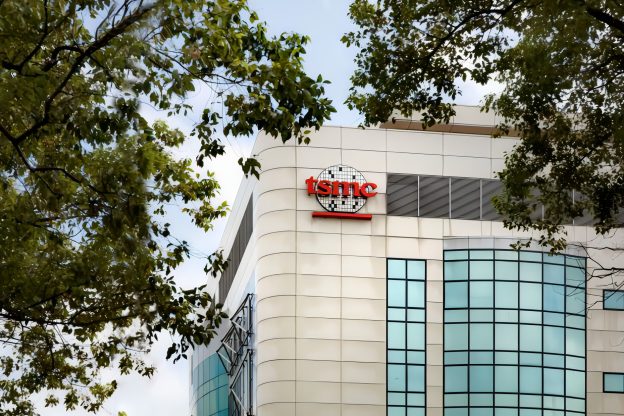
Construction of TSMC’s European fab is advancing. According to Commercial Times, sources say the company’s new Dresden facility has entered its main structural construction phase and is expected to move into fab-system installation and equipment move-in during the second half of 2026. The plant will be Europe’s first foundry capable of supporting 28/22 nm and 16/12 nm process technologies, with production targeted for 2027, as the report highlights.
Once the main structure is finished, work will shift to essential fab systems, including cleanroom installation, chemical delivery, ultrapure water facilities, and gas supply. Equipment move-in and tool calibration will then begin gradually from 2026 onward, as the report indicates, citing sources.
In August 2024, ESMC, TSMC’s joint venture with Bosch, Infineon, and NXP, broke ground on what will become the EU’s first FinFET-capable pure-play foundry. When fully operational, ESMC is expected to produce 40,000 300mm (12-inch) wafers per month using FinFET process technologies, according to its press release.
TSMC’s Broader European Strategy
TSMC’s European expansion extends well beyond the Dresden project. According to Liberty Times, the company announced in May that it would establish a chip design center in Munich to support European customers developing high-performance automotive, AI, and industrial IoT chips, with operations scheduled to begin in the third quarter of 2025.
Additionally, TSMC has formed an AI chip research and development center at the Technical University of Munich (TUM). As Liberty Times reports, citing German outlet BR24 and the Bavarian state government, the initiative reflects the company’s deepening collaboration with Germany’s research community.
Evolving Dynamics in Europe’s Chip Sector
Beyond ESMC’s progress, other European IDM companies are also making notable moves. Notably, according to EE Times China, citing Dutch outlet de Gelderlander, NXP is reportedly preparing to close multiple 8-inch fabs as it transitions toward more efficient 12-inch production.
Meanwhile, the recent Nexperia dispute has reignited debate over the autonomy of Europe’s automotive and industrial chip supply chains. While the issue has had broad implications, there are signs of easing. According to BBC, the Dutch government has suspended its intervention in Nexperia following talks with China. The report adds that the decision is expected to help ease tensions between the European Union and China.
Read more
- [News] TSMC Partners with Technical University of Munich to Establish AI Chip R&D Center in Bavaria
- [News] TSMC Accelerates 2nd Arizona Fab Production; Ramp-Up Schedules for Japan, Germany Undisclosed
(Photo credit: TSMC)
Please note that this article cites information from Commercial Times, TSMC, Liberty Times, BR24, the Bavarian state government, EE Times China, de Gelderlander, and BBC.