Popular Keywords



About TrendForce News
TrendForce News operates independently from our research team, curating key semiconductor and tech updates to support timely, informed decisions.
[News] Memory Crunch Hits China: Xiaomi, Huawei Reportedly Tap Domestic Suppliers
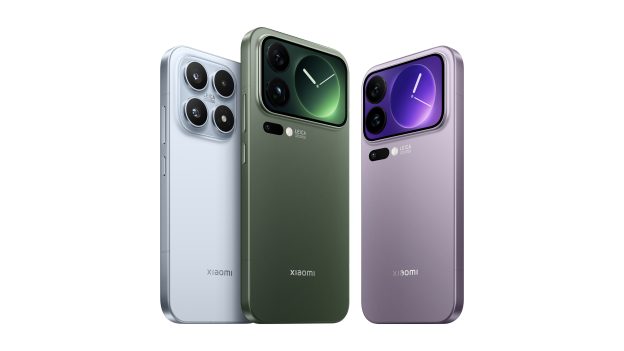
Amid a reported DRAM shortage and price hikes for DDR4 and DDR5, China’s smartphone market is feeling the squeeze. According to 36Kr, one major domestic brand recently had 30–40% of its requested memory volumes slashed after submitting its demand forecast. So how is this playing out across China’s supply chain — and who stands to gain?
Chinese Smartphone Brands Hit by Memory Shortages
36Kr notes that in the past, smartphone makers in China would place quarterly orders with memory suppliers based on their production roadmap. However, that is no longer the case. Industry sources cited by the report indicate that allocation now depends more on how much supply Samsung or SK hynix is willing to provide, rather than on the brands’ requested volumes.
Interestingly, the report highlights NVIDIA’s massive memory demand as a key factor behind China’s memory shortage. According to 36Kr, in 2025, the chip giant is expected to ship 3–4 million GPUs, each with 80–140GB of HBM. Even conservatively, that totals at least 240 million GB—equivalent to the RAM in 20 million smartphones, or roughly one-tenth of China’s annual shipments, the report suggests.
Amid the memory shortage, China’s “big-memory arms race” is cooling in 2025. The once-hyped 24GB+1TB setups, according to 36Kr, have nearly disappeared from major brands (except Redmi and Red Magic), with top flagships now topping out at 16GB of RAM.
Notably, the report highlights that to stretch costly memory where it counts, one smartphone executive has revealed that many low-margin or uncertain-volume models have already been axed.
China’s Memory Firms Poised to Benefit
As leading DRAM firms like Samsung and SK hynix scale down on legacy products, China’s domestic memory firms are expected to benefit. 36Kr reports that Xiaomi has been urgently sourcing memory, giving even previously excluded domestic suppliers rare opportunities to enter the smartphone supply chain.
Meanwhile, 36Kr has learned that tech giant Huawei is reportedly locking up the entire production capacity of a leading domestic storage manufacturer.
To be more specific, chinastarmarket.cn explains that with NAND giant YMTC and DRAM leader CXMT still unlisted, China’s A-share storage supply chain is dominated by module makers like Longsys Electronics and Biwin Storage, chip distributors such as Shannon Semi, and memory interface chip producers including Montage Tech.
The report notes that with memory prices expected to stay high into 2026, domestic chipmakers’ inventories are now a key driver of future profits and a major market focus. Longsys, for example, reported Q3 inventory of RMB 8.517 billion — higher than peers — highlighting its aggressive strategy to capitalize on the current cycle, according to chinastarmarket.cn.
However, the report also cautions that module makers in the midstream have relatively weak bargaining power, and if their inventory is concentrated in fast-iterating, lower-end products, they may face the added risk of slower sell-through down the line.
Read more
- [News] Memory Shortage Reportedly Triggers Order Caution from Smartphone Clients, Pressuring SMIC
- [News] Memory Crunch Ripples Across Chip Supply Chain: SMIC, NVIDIA, Device Makers Feel the Hit
(Photo credit: Xiaomi)
Please note that this article cites information from 36Kr and chinastarmarket.cn.