Popular Keywords



About TrendForce News
TrendForce News operates independently from our research team, curating key semiconductor and tech updates to support timely, informed decisions.
[News] Decoding China’s Lithography Push to Challenge ASML: From SiCarrier to Alternative EUV Paths
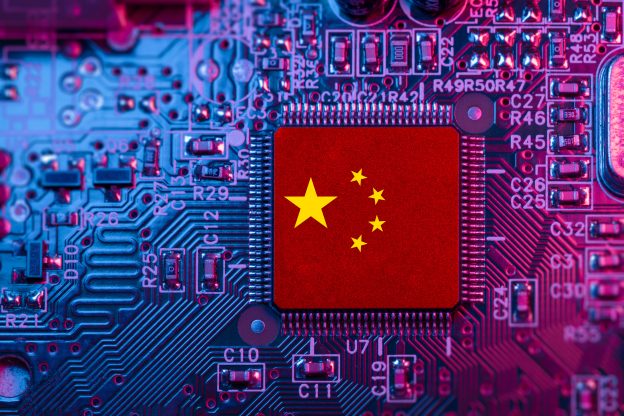
As Bejing advances toward semiconductor self-reliance, high-end chipmaking tools are indispensable—yet lithography, controlled by ASML, poses the biggest challenge, with its EUV machines for sub-5nm chips off-limits for export. Notably, 42% of ASML’s Q3 2025 sales came from China, underscoring the country’s dependence on the Dutch giant’s less advanced DUV tools.
Still, progress is underway, driven by firms like SiCarrier and AMIES, a spinoff of Shanghai Micro Electronics Equipment (SMEE). Here’s a snapshot of China’s latest advancements and the country’s key technical hurdles.
SiCarrier’s Lithography Ambitions Face SAQP+DUV Limits
At SEMICON China in March, SiCarrier, founded in 2022, stole the spotlight by unveiling a suite of wafer fab tools—including epitaxy (EPI) systems, etching tools, chemical vapor deposition (CVD) equipment, physical vapor deposition (PVD) gear, and atomic layer deposition (ALD) machines.
What’s generating the biggest buzz, however, is SiCarrier’s rumored entry into lithography machines. According to Bloomberg, the company secured a late-2023 patent leveraging self-aligned quadruple patterning (SAQP) with deep ultraviolet (DUV) lithography, achieving 5nm-class performance without EUV.
Nonetheless, significant challenges remain. DUV lithography, which uses wavelengths of 193 nm (ArF) or 248 nm (KrF), is inherently limited in the minimum feature size achievable per exposure compared with EUV’s 13.5 nm wavelength.
Blocked from EUV access, SiCarrier and other Chinese firms turn to techniques like SAQP with multiple DUV exposures to produce advanced chips. However, this approach is prone to alignment errors, driving up defect rates.
According to Wccftech, citing institutional investor data, SMIC’s 5nm wafers—expected to complete development by 2025—could cost up to 50% more than TSMC’s equivalent, with yields reportedly as low as 33%, highlighting the limitations of DUV-based processes.
Homegrown DUV Machines Taking Shape amid Uncertainty
Despite yield challenges, China is pressing ahead with domestically developed DUV lithography machines, a key step toward chip independence. According to a September Financial Times report, SMIC is testing a DUV system from Shanghai start-up Yuliangsheng, reportedly linked to SiCarrier.
The machine under trial is said to be a 28nm DUV tool, employing multi-patterning techniques to produce 7nm chips. However, The report noted that though it could potentially handle 5nm manufacturing at lower yields, more advanced nodes remain out of reach. In addition, while most components are said to be made domestically, some are still imported. Thus, the company is reportedly working to produce all parts in China.
Storm Media, citing YouTube Channel “Raven’s Laugh,” states that Yuliangsheng has produced three lithography machines, which have been delivered to three fabs for testing and calibration.
However, the technology gap remains wide. According to Tom’s Hardware, Yuliangsheng’s immersion DUV system resembles ASML’s Twinscan NXT:1950i in 2008, originally designed for 32nm-class processes in a single exposure. While the machine could theoretically support 7nm and 5nm nodes, ASML’s NXT:2000i—developed for such advanced fabrication—is generations ahead, the report adds.
Thus, Tom’s Hardware notes that even if SMIC integrates the tool into its 28nm process by 2027, reaching sub-10nm will demand redesigned scanners and several years of development—meaning domestically made lithography systems likely won’t achieve sub-10nm production before 2030.
SMEE and AMIES Step into the Race
In addition to SiCarrier and Yuliangsheng, The Financial Times report named another player: SMEE, which makes less advanced DUV machines. According to South China Morning Post, in late 2023, shareholder Zhangjiang Group briefly posted on social media that SMEE had “successfully developed a 28nm lithography machine,” though the claim was later retracted.
AMIES Technology, a spin-off of SMEE, is emerging as a key contender. SMEE’s self-developed 600 series lithography system has entered mass production at the 90nm node and is now developing a 28nm immersion model, according to STCN.
On the other hand, AMIES’s flagship product, an advanced packaging lithography system, dominates China’s market with a 90% share and holds 35% of the global market, South China Morning Post suggests. Designed for high-end chip packaging, it reportedly supports wafer- and panel-level advanced packaging such as Flip Chip, Fan-in, Fan-out WLP/PLP, and 2.5D/3D integration.
Other Rumors: Alternative to Laser-Produced Plasma?
If ASML’s EUV machines remain out of reach, could China develop an alternative plasma generation method? ASML’s approach, known as laser-produced plasma or LPP, relies on firing high-energy lasers at tin droplets and requires complex Field Programmable Gate Array-based control systems. The equipment is massive, power-hungry, and extraordinarily expensive to manufacture.
However, a Wccftech report in March, citing images posted by tipsters on X, revealed that Huawei’s Dongguan facility was testing a different approach: a laser-induced discharge plasma (LDP) system.
The tool, believed to be developed by China’s Harbin Provincial Innovation, uses a LDP-based method to generate the critical 13.5nm wavelength EUV light. According to the report, instead of ASML’s laser-blasted tin droplets, this system vaporizes liquid tin between electrodes and converts it into plasma through high-voltage discharge.
However, as Chinese self-media outlet Business Morning on eastmoney.cm explains, where LDP shows its edge over traditional DPP is in operational longevity. Conventional discharge-produced plasma systems suffer from excessive thermal loading on electrodes and severe corrosion issues. LDP could reportedly alleviates these problems by offloading some of the initial heating work to lasers.
Yet even with these improvements, the path ahead remains steep. Within the current technological landscape, LDP still faces challenges in matching the performance and reliability of ASML’s laser-produced plasma approach, Business Morning notes.
In sum, China’s domestic players may be closing gaps in DUV tools, but replicating ASML’s EUV ecosystem—will require years of R&D and global supply chain resilience. Still, the rise of firms like SiCarrier, SMEE, and AMIES suggests that China is determined to chip away at one of its toughest technological frontiers.
Read more
- [News] SiCarrier Subsidiaries Reportedly Launch China’s Fully Independent EDA, 3nm Test Equipment
- [News] China’s Chip Tool Maker SiCarrier Reportedly Hits RMB65B Valuation, Secures Billion-Yuan Orders
(Photo credit: FREEPIK)
Please note that this article cites information from Bloomberg, Wccftech, Financial Times, Tom’s Hardware, South China Morning Post, Storm Media, YouTube Channel “Raven’s Laugh,” STCN, Business Morning on eastmoney.cm and ASML.