Popular Keywords



About TrendForce News
TrendForce News operates independently from our research team, curating key semiconductor and tech updates to support timely, informed decisions.
[News] Huawei Unveils Enterprise Storage Refresh: A Series Dorado Slashes HBM Dependency via UCM
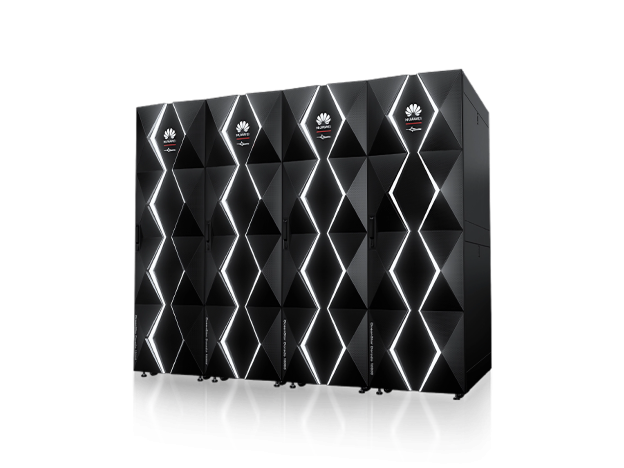
Beyond its September reveal of a multi-year Ascend AI chip roadmap through 2028—complete with proprietary HBM development—Huawei is making equally aggressive moves in enterprise storage. At its Huawei Connect Europe event in Madrid, the tech giant rolled out a sweeping refresh of its storage portfolio, including AI-tuned A Series Dorados, entry-level all-flash arrays, an all-flash Pacific system designed to retire traditional disk drives, and two next-gen OceanDisk smart enclosures, according to Blocks & Files.
Notably, Blocks & Files suggests that while Huawei has little to no presence in the U.S., its storage business is thriving globally. Huawei Europe, for example, reportedly posted 20% revenue growth in 2024. Research firm data cited in the report suggest that Huawei could be the world’s second-largest storage vendor, trailing only Dell and ahead of all other competitors.
As per the report, Huawei’s storage lineup is built around two core families: the OceanStor Dorado arrays—handling structured data across SAN (block storage), NAS (file storage), and S3 (object storage) protocols—and the OceanStor Pacific systems for unstructured data. Complementing these is the controller-less OceanDisk JBOD (Just a Bunch of Disks) line, which functions as expandable storage shelves, the report adds.
UCM Powers Huawei A Series Dorado to Reduce HBM Reliance
Among these, the report highlights that Huawei’s current OceanStor Dorado v6 series goes head-to-head with Pure Storage and NetApp arrays. The lineup, which is powered by Huawei’s Kunpeng CPUs, Ascend DPUs, and 128 TB QLC SSDs, reportedly includes four models: Dorado 3000, 5000, 8000, and 18000.
While the report notes that the new v7 Dorados are already deployed across Europe, including Germany, the spotlight is on Huawei’s A Series Dorado—a high-performance variant built specifically for AI training and inference, separate from the standard Dorado arrays.
Notably, this is where Huawei’s UCM (Unified Cache Manager) technology comes in. According to Block & Files, Huawei’s A Series Dorado, including A600 and A800, features KV Cache offload, delivering data rapidly to GPU servers via open-source UCM (Unified Cache Manager) software.
As the report explains, UCM intelligently manages the KV Cache, automatically routing hot data to GPU HBM, warm data to DRAM, and cold data to SSD based on real-time access. Amid U.S. export restrictions on HBM3 and HBM4, this technology enables Chinese data centers to run large AI models efficiently using cheaper, older, or domestic memory, cutting HBM reliance by up to 80% in some workloads, as per Block & Files.
EE Times China highlighted in August that UCM not only boosts AI inference efficiency but could also reduce reliance on HBM memory, enhancing domestic AI large-model inference performance and strengthening China’s AI inference ecosystem. The report added that starting January 2, 2025, the U.S. bans exports of HBM2e and higher-grade HBM chips to China.
As reported by Security Times, Huawei’s UCM system combines multiple sparse attention algorithms to optimize compute and storage coordination, boosting long-sequence TPS by 2-22x and lowering per-token costs. Officials cited by the report added that in multi-turn conversations and knowledge search, the system directly accesses stored data rather than recalculating, cutting initial response delays by up to 90%.
Huawei’s OceanStor Pacific: Data Lakes with a ChatGPT-Style Edge
On the other hand, as per Block & Files, Huawei’s OceanStor Pacific supports multiple data lake protocols: SMB (Server Message Block), NFS (Network File System), S3 (Simple Storage Service), HDFS (Hadoop Distributed File System), POSIX (Portable Operating System Interface), MPI-IO (Message Passing Interface I/O), and Apache Iceberg. At its core reportedly sits Huawei’s DME (Data Management Engine)—a ChatGPT-style interface enabling admins to manage storage through natural language commands.
The report also highlights Huawei’s OceanStor Pacific 9926, which offers 8PB (petabytes, or 8,000 terabytes) of capacity in a 2U (two rack units) enclosure, packed with 36 × 122.88 TB SSDs. These are Huawei-made drives using third-party NAND, the report suggests. Huawei claims the system delivers 95% space savings over equivalent HDD setups and boasts an energy efficiency of 0.25 W/TB, cutting power consumption by 79% compared with traditional disk storage, the report notes.
Read more
- [News] China’s NAND Giant YMTC Reportedly Moves into HBM Using TSV, Following CXMT and Huawei
- [News] Huawei Unveils Ascend 950 with In-House HBM in 2026, Touts SuperPoD to Rival NVIDIA
(Photo credit: Huawei)
Please note that this article cites information from Blocks & Files, EE Times China and Security Times.