Popular Keywords



About TrendForce News
TrendForce News operates independently from our research team, curating key semiconductor and tech updates to support timely, informed decisions.
[News] Hyperscalers Ramp Up Capex Amid AI Boom, Risks Lurk: Microsoft, Meta & Alphabet in Spotlight
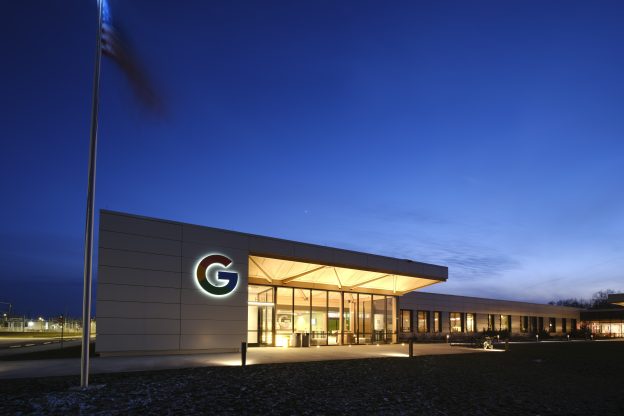
As hyperscalers kick off their latest earnings reports today, capex is taking center stage amid AI bubble concerns. But for now, those worries may be on hold, as Alphabet, Meta, and Microsoft all plan to ramp up spending significantly, CNBC reports.
Among them, Alphabet—Google’s parent—stands out for its ambition. Reuters reports the company has raised its 2025 capex forecast to $91–$93 billion, driven by strong AI demand. This marks the third upward revision for 2025, following $75 billion in February and $85 billion in July, after spending $52.5 billion in 2024, the report adds.
Notably, citing CFO Anat Ashkenazi, CNBC suggests that Alphabet’s 2026 could see “a significant increase” as well.
Meta, as per CNBC, also boosted the low end of its annual capex guidance to $70 billion from $66 billion, with CEO Mark Zuckerberg noting that “making a significantly larger investment here is very likely to be profitable.”
On the other hand, Microsoft, racing to expand AI-powered data centers, spent a staggering $34.9 billion in the quarter ending Sept. 30—a 74% jump from a year ago and well above the $30 billion estimate, The New York Times and CNBC report. CFO Amy Hood added that fiscal 2026 capex is expected to grow even faster than 2025, according to CNBC.
Amazon, set to release its earnings on October 30, reported $31.4 billion in capital expenditures in Q2, calling it “reasonably representative” of spending for the rest of the year, CNBC reported. Combined with $24 billion in Q1, total capex could reach $118 billion in 2025, exceeding the prior $100 billion forecast, as per CNBC.
But beneath the bold investment figures, risks are quietly building for these cloud giants. Here’s a closer look.
Meta: One-Time Tax Hit and Reality Labs Losses in Spotlight
As The Guardian points out, Meta posted mixed Q3 2025 results, reporting record quarterly revenue but a massive tax hit that crushed earnings per share. The company earned $51.24 billion in revenue, reportedly surpassing both Wall Street and its own forecasts. However, EPS came in at $1.05, far below the expected $6.70.
Reuters explains that Meta took a nearly $16 billion one-time hit in Q3 tied to U.S. President Trump’s Big Beautiful Bill. Meta said that excluding this charge, EPS would have risen by $15.93 billion to reach $18 billion, the report adds.
On the other hand, Meta’s Reality Labs continues to drag on profits. CNBC reports the division has accumulated over $70 billion in losses since late 2020, underscoring the high cost of building VR, AR, and other consumer hardware.
In Q3, Reality Labs posted an operating loss of $4.4 billion on $470 million in sales. CFO Susan Li told analysts that Q4 revenue is expected to fall short of last year, partly because no new VR headset launched in 2025, CNBC notes.
Notably, with Meta raising the low end of its annual capex guidance to $70 billion, Reuters notes that employee compensation will be the second-largest cost, driven by salaries for staff hired in 2025, particularly in AI roles.
Microsoft: OpenAI Investment Remains Murky and Unclear
Microsoft posted $77.7 billion in sales, up 18% year-over-year, with $27.7 billion in profits, a 12% increase. As The New York Times highlights, growth was mainly driven by Azure and its partnership with AI startup OpenAI.
Nonetheless, Tom’s Hardware points out that though Microsoft’s AI strategy is closely linked to OpenAI, the financial details remain opaque. In its latest annual report for the fiscal year ending June 30, Microsoft listed $4.7 billion under “other, net” expenses without providing a detailed breakdown.
The report, citing The Wall Street Journal, notes that most of this amount comes from “net recognized losses on equity method investments.” While it’s widely understood that OpenAI falls into this category, the filing never mentions OpenAI by name and does not classify it as a related party, Tom’s Hardware suggests.
According to ijiwei, Microsoft said at its latest earnings call that the company has committed a total investment of $13 billion in OpenAI. As of the end of September, $11.6 billion has already been funded. The investment impacted Microsoft’s Q1 profit by $3.086 billion, the report adds.
Alphabet: Strong Cloud Growth and Big AI Deals
Among the hyperscalers, Alphabet’s momentum seems to be the most clear. Bloomberg reports that the company reported third-quarter sales of $87.5 billion, topping the $85.1 billion analysts expected, boosted by its cloud unit as AI startups turn to Google for computing power. Net income came in at $2.87 per share, above Wall Street’s $2.26 estimate, the report suggests.
CNBC reports that Google Cloud is gaining momentum, with 32% year-over-year growth and a backlog of $155 billion. CEO Sundar Pichai and CFO Anat Ashkenazi noted that the company has secured more $1 billion deals in the past nine months than it did in the previous two years combined, as per the report.
According to CNBC, Alphabet’s recent highlights include a $10 billion six-year cloud contract with Meta in August, and a deal with Anthropic giving the AI company access to up to 1 million of Google’s custom TPUs, valued at tens of billions of dollars.
Read more
- [News] Google Reportedly Courts Smaller CSPs to Host TPUs, Taking Aim at NVIDIA
- CSP CapEx to Soar Past US$520 Billion in 2026, Driven by GPU Procurement and ASIC Development, Says TrendForce
(Photo credit: Google)
Please note that this article cites information from CNBC, Reuters, Bloomberg, The Wall Street Journal, Tom’s Hardware, The Guardian, and ijiwei.