Popular Keywords



About TrendForce News
TrendForce News operates independently from our research team, curating key semiconductor and tech updates to support timely, informed decisions.
[News] AI Could Replace Nearly 100 Million Jobs in the Next Decade, Senate Report Warns

According to The Hill, a new report from Democratic staff on the Senate Health, Education, Labor and Pensions (HELP) Committee—led by Sen. Bernie Sanders—warns that AI and automation could displace nearly 100 million jobs across a wide range of industries over the next decade.
As part of the investigation, committee staff turned to ChatGPT to gauge how AI might reshape different sectors. It identified 20 workforces as being most vulnerable, projecting that 15 of them could see more than half of their employees replaced by automation and AI within ten years.
Among the hardest hit, the report finds, will be fast-food and counter service workers. It estimates that more than 3 million positions—about 89% of the total workforce in that category—could be replaced within the next decade as automation expands.
Beyond the food service sector, the report points to other occupations likely to face significant disruption, including customer service representatives, laborers and freight, stock and material movers and secretaries and executive assistants—excluding those in legal, medical, and executive fields.
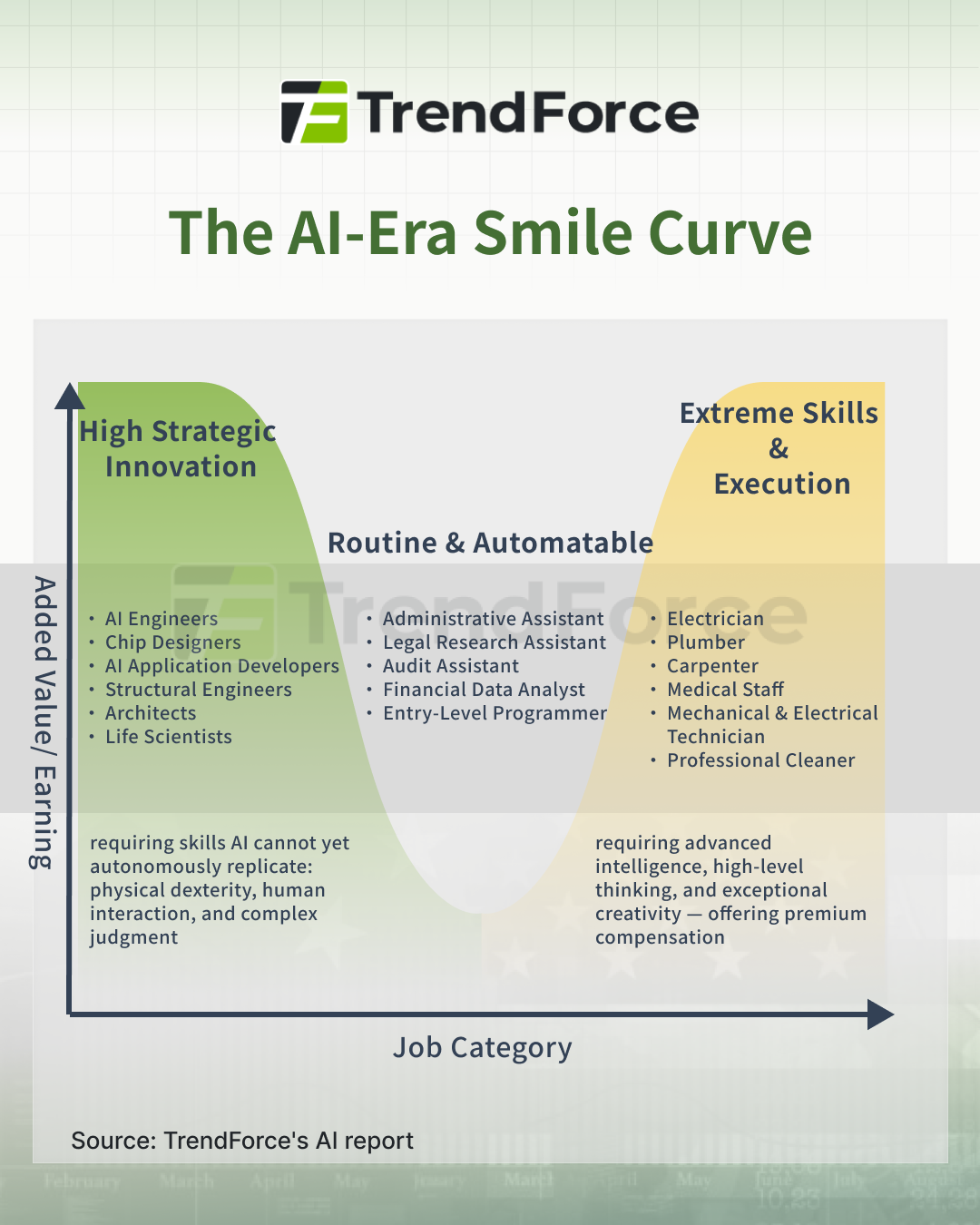
Furthermore, Fortune noted that AI’s impact will not be limited to low-wage positions. Professions such as accounting, software development, and nursing are also expected to face substantial reductions. Echoing these concerns, Investopedia, citing Axios, reported that Dario Amodei, cofounder and CEO of Anthropic—the company behind the Claude chatbot—warned that AI could eliminate up to half of all entry-level white-collar positions.
Policy Responses and Legislative Proposals
In response to potential job losses caused by AI, the research led by Sen. Sanders advocates for a series of legislative measures, The Hill reported. These include establishing a standardized 32-hour workweek, expanding overtime and break protections, raising the federal minimum wage to at least $17 an hour, closing tax loopholes for corporations that rely on AI and automation, and requiring companies to provide employees with an ownership stake in the business.
Read more
- [News] AI Boom Pushes Global Hectocorns Estimated Combined Valuation to $1.4T; OpenAI Leads
- [News] Will the Investment Pay Off? Trillions Poured Into AI, Yet Chips Reportedly Last Only 3–5 Years
(Photo credit: FREEPIK)
Please note that this article cites information from The Hill, Health, Education, Labor and Pensions (HELP) Committee, Fortune, Investopedia, and Axios.