Popular Keywords



About TrendForce News
TrendForce News operates independently from our research team, curating key semiconductor and tech updates to support timely, informed decisions.
[News] Japan Pledged JPY 536 Billion to Micron, Escalating Global Semiconductor Subsidy Race
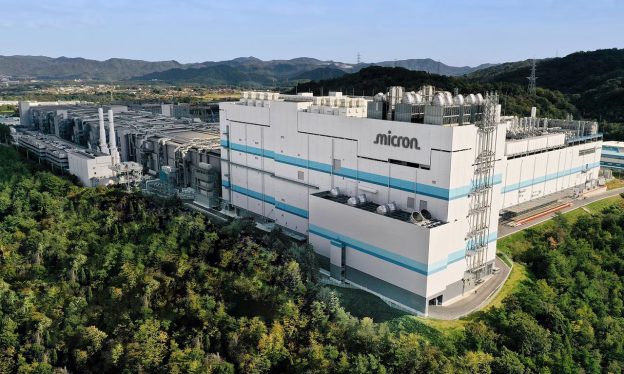
On September 12, Japan’s Ministry of Economy, Trade and Industry (METI) announced a subsidy of up to JPY 536 billion for Micron’s DRAM plant in Hiroshima. The funding will support new plant construction, production, and R&D, with a particular focus on high-bandwidth memory (HBM) and extreme ultraviolet (EUV) lithography. Micron plans to invest around JPY 1.5 trillion in the site, targeting mass production of next-generation 1-gamma process DRAM chips by 2027.
This massive grant underscores Japan’s dual strategy of nurturing domestic capabilities while attracting foreign investment. The government sees semiconductors as a national strategic priority and aims to reclaim its position in the global semiconductor supply chain. Japan had already provided multiple rounds of subsidies to Micron in 2022 and 2023 to support EUV adoption and advanced production lines.
Beyond Micron, Japan has strengthened its ecosystem by attracting TSMC. The chip giant is building two fabs in Kumamoto, with the first receiving JPY 476 billion in subsidies and slated to begin production by the end of 2024. The second fab will focus on 6nm chips.
Meanwhile, Japan is bolstering local champions. According to Nikkei, companies including Sony, Mitsubishi Electric, and Rohm plan to invest JPY 5 trillion by 2029 in semiconductors such as power devices, sensors, and logic chips, in an effort to revitalize Japan’s global semiconductor presence.
The Global Semiconductor Subsidy Race
Major economies are ramping up subsidy packages to secure supply chain resilience and strengthen technological competitiveness.
The U.S.
In August 2022, the U.S. passed the CHIPS and Science Act, providing about USD 52.7 billion in direct subsidies and tax incentives, benefiting enterprises such as TSMC, Intel, Samsung and Micron.
Micron: Secured USD 6.1 billion to build large memory fabs in New York and Idaho.
Samsung: Granted up to USD 6.4 billion to expand its advanced fab in Taylor, Texas.
TSMC: Received up to USD 11.6 billion in subsidies and loans for two fabs in Phoenix, Arizona.
European Union
The EU Chips Act (2022) mobilizes EUR 43 billion in public-private investment, aiming to raise Europe’s global chip market share to 20% by 2030.
STMicroelectronics: Backed by a EUR 2 billion Italian subsidy for a SiC fab in Sicily.
TSMC with Bosch, Infineon, and NXP: Secured EUR 5 billion from Germany for a Dresden fab targeting automotive and industrial chips.
Infineon: Received EUR 920 million for a new fab in Dresden.
Korea
In 2023, the K-Chips Act boosted tax credits for strategic technologies: up to 25% for large firms and 35% for SMEs.
In May 2024, Korea unveiled a KRW 260 trillion support package including low-interest loans and ecosystem funds. The government is also backing Samsung and others in building the world’s largest chip cluster in Yongin, Gyeonggi Province.
China
China’s support system centers on the National Integrated Circuit Industry Investment Fund (a.k.a. “Big Fund”), supplemented by local funds. Since 2014, it has mobilized trillions in private capital.
In 2024, the third phase of the Big Fund was launched with registered capital of RMB 344 billion, entering its investment phase in 2025. Unlike earlier rounds, Phase III focuses more on “chokepoint” technologies, including semiconductor equipment, core materials, and EDA software. On September 12, its first disclosed investment was RMB 1.77 billion in equipment maker Piotech, aimed at expanding advanced semiconductor tool capacity.
(Photo credit: Micron)