Popular Keywords



About TrendForce News
TrendForce News operates independently from our research team, curating key semiconductor and tech updates to support timely, informed decisions.
[News] India’s Chip Push Grows as ARM Unveils Design Office for Advanced Chips, Including 2nm
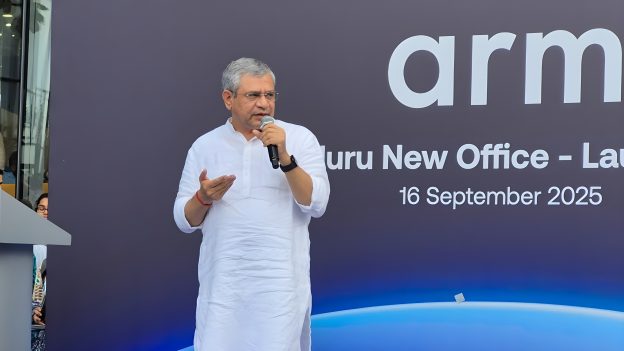
India’s chip ambitions continue to take shape. Following the launch of the country’s first 3nm design center led by Renesas, ARM’s newly inaugurated Bengaluru office is reported to kick off India’s advanced 2nm chip design, according to BISinfotech and IANSlive.
On September 16, Union Minister Ashwini Vaishnaw, who oversees Railways, Information & Broadcasting, and Electronics & IT, inaugurated ARM’s new Bengaluru office, a key milestone in India’s semiconductor journey, as noted by the reports. The unit is expected to develop cutting-edge chips, including 2nm technology for AI servers and smartphones, the reports add.
BISinfotech, citing the minister, highlights India’s rapid growth in electronics manufacturing, noting that the sector is now valued at ₹11.5 lakh crore (roughly $130 billion). Over the past 11 years, manufacturing output has grown six-fold, while exports have jumped eight-fold, establishing electronics as one of the country’s major export categories, the report suggests.
Notably, as per IANSlive, the minister also announced the launch of the India Deep Tech Fund, starting at $1 billion, aimed at supporting innovation in AI, semiconductors, biotech, and other advanced technology sectors.
Roadblocks on India’s Chip Journey
However, as noted by the Economic Times, despite India’s strong engineering talent and government backing, the country faces significant hurdles in creating a competitive semiconductor ecosystem. A major challenge is reportedly the limited availability of critical raw materials—including silicon wafers, high-purity gases, specialty chemicals, and ultrapure water—essential for chip manufacturing.
On the other hand, the report points out that India accounts for nearly 20% of the global semiconductor design workforce, yet, the country still lacks specialized skills needed for chip fabrication and testing.
Another report from The Federal also highlights India’s paradox: the country has rolled out generous fiscal incentives under its ₹76,000-crore Semiconductor Mission 1.0, launched in 2021, to attract foreign chipmakers to set up assembly and manufacturing units. At the same time, however, import restrictions on critical raw materials risk undermining efforts to build a reliable domestic supply chain.
According to The Federal, since March 2025, the Directorate General of Foreign Trade (DGFT) has imposed curbs on importing gold compounds—covering platinum, palladium, rhodium and iridium alloys, as well as colloidal metals—if they contain more than 1% gold by weight. The move, aimed at curbing gold smuggling disguised as chemical imports, requires banks to secure RBI clearance and other importers to obtain DGFT authorization, the report adds.
Read more
- [News] Arm Reportedly Weighs Chiplet and Solution Development, Raising Customer Tensions
- [News] Arm Reportedly Taps Amazon AI Chip Director to Drive In-House Chip Plans
(Photo credit: Ministry of Electronics & IT of India)
Please note that this article cites information from BISinfotech, IANSlive, the Economic Times and The Federal .