Popular Keywords



About TrendForce News
TrendForce News operates independently from our research team, curating key semiconductor and tech updates to support timely, informed decisions.
[News] Huawei’s R&D Hits Record 22.7% of 1H25 Sales, Dragging Profits Amid Chip Drive
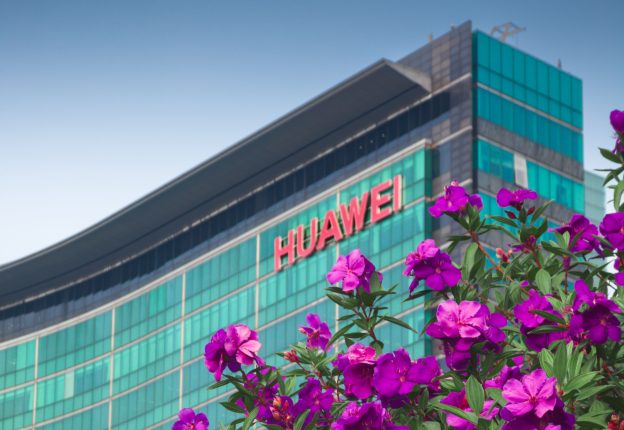
While China ramps up chip self-sufficiency, the shifting landscape poses both challenges and opportunities for domestic tech players. Against this backdrop, Huawei saw first-half net profit fall 32%, as continued R&D investment weighed on results, Reuters reports.
Notably, the company boosted R&D spending in 1H25 to 96.9 billion yuan. As per 36Kr, citing Banshu-Caijing, this represents a 9.04% year-on-year rise and 22.7% of revenue, marking a historical high. If this trend continues, Huawei’s full-year R&D expenditure is expected to set a new record, the report suggests.
Caijing Times, on the other hand, notes that Executive Director and Huawei Cloud CEO Zhang Ping’an revealed in June that the company’s R&D spending exceeded 170 billion yuan in 2024, surpassing its 10% of revenue target, and that investment in R&D will rise further this year.
As Reuters highlights, between January and June, Huawei’s net income fell to 37 billion yuan ($5.17 billion) year-on-year amid high R&D investment, while revenue grew 4% to 427 billion yuan, its strongest first-half performance since 2020.
Huawei’s Big Push into Chips
While Huawei’s ICT infrastructure—accounting for over 40% of 2024 sales—faces pressure from a slowdown in 5G investment, with major clients like China Mobile, China Telecom, and China Unicom cutting capex by 9%, 28%, and 15% in 1H25, 36Kr notes that Huawei’s chip business continues to attract the most attention.
The report notes that Huawei’s chip portfolio spans Kirin for smartphones, Kunpeng for data centers, and Ascend for AI. Caijing Times, citing Zhang Ping’an’s previous remarks, notes that Huawei’s additional investment focuses on core IT technologies, including Ascend, Kunpeng CPUs, Kirin mobile SoCs, AI network chips, as well as operating systems for servers and mobile devices and foundational software like databases.
Notably, 36Kr highlights that in April, Huawei launched the CloudMatrix 384, linking 384 Ascend 910 chips to overcome single-card performance limits. The initiative, as per the report, involved over 10,000 engineers from Huawei Cloud, HiSilicon, 2012 Labs, and other teams, indicating how sustained R&D spending is driving Huawei’s AI computing capabilities.
According to 36Kr, Huawei has been making progress in other product lines as well, as servers powered by Kunpeng chips have reportedly captured over 20% of China’s overall server market and more than 50% of the domestic chip server market.
Huawei’s AI chips remain ahead of local rivals as NVIDIA’s H20 stumbles under U.S.-China tensions. Financial Times reports that China plans to triple AI processor output next year, with a Huawei-dedicated fab starting production by year-end and two more plants coming online in 2026.
Read more
- [News] China Reportedly to Triple AI Chip Output Next Year With Fabs Serving Huawei, Cutting NVIDIA Reliance
- [News] Huawei’s 5nm Kunpeng 930 Leak Raises Big Question: TSMC or SMIC Behind it?
(Photo credit: Huawei)
Please note that this article cites information from Reuters, 36Kr, Banshu-Caijing, Caijing Times, and Financial Times.