[News] Texas Instruments Reportedly Launches Largest-Ever China Price Hike: 60K Products Up 10%–30%
According to ijiwei, Texas Instruments (TI) has introduced its largest-ever price hike for Chinese customers, raising prices by 10% to 30% on more than 60,000 products. While TI’s notice states that the new pricing will take effect on August 15, some Chinese customers report that the changes have already been implemented as of August 4, the report adds.
As noted by the report, TI’s price adjustments show three distinct trends. First, prices have significantly increased across industrial control chips, which account for over 40% of the company’s product portfolio.
In addition, the report notes that prices for automotive-grade power management ICs (PMICs) have increased by 18% to 25%, while isolators used in EV battery management systems (BMS) are up 22%. The report also highlights that chips for consumer electronics and telecom are affected, with prices for fast-charging ICs and RF front-end chips rising by 5% to 15%.
As for the reason behind the price hikes, EE Times China notes that a key driver is cost pressure—TI’s gross margin in China has long lagged its global average. Additionally, rising costs of raw materials, such as high-purity silicon wafers, have prompted the company to raise prices to relieve profit pressure.
In addition, ijiwei points out that the price hikes underscore how China’s chip origin rules are raising import barriers and pushing U.S. chipmakers to pass costs downstream. Under these rules, chips fabricated in U.S.-based fabs reportedly face higher import duties from China, according to a previous report from ijiwei. Roughly 90% of TI’s wafer production is in-house, with most of it based in the U.S., making the company more exposed to China’s chip origin policy, ijiwei notes.
Signs of Recovery—or Not?
Meanwhile, as EE Times China highlights, TI’s recent price adjustments align with its ongoing recovery trend. The company had seen revenue decline since Q4 2022 but experienced a rebound in 2025. In Q1, revenue reached $4.069 billion, up 11% year over year; in Q2, it rose to $4.45 billion, a 16% increase.
ijiwei also suggests that the price hike indicates inventory turnover has returned to normal levels, and visibility into demand for industrial automation and automotive applications has improved.
However, EE Times China points out that second-quarter market demand was heavily influenced by a “stockpiling effect” driven by tariff concerns. Whether this short-term surge can translate into sustained recovery momentum remains uncertain. The report also notes that earnings pressure on companies like STMicroelectronics indicates the industry’s recovery is not broad-based.
Read more
- [News] China’s New Chip-Origin Rules Put Foundries and IDMs on Edge: Key Updates from 35 U.S. Fabs
- [News] GlobalFoundries Partners with Chinese Foundry for Localized Automotive-Grade CMOS Production
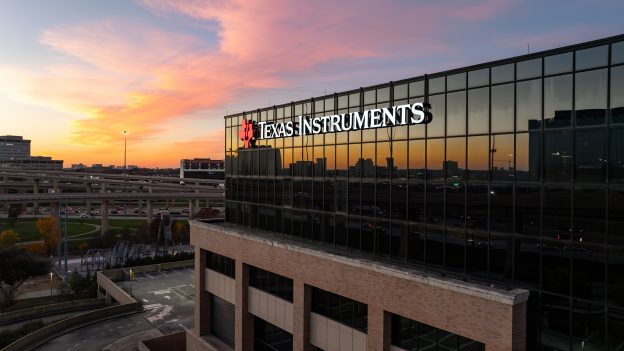
(Photo credit: Texas Instruments)
Please note that this article cites information from ijiwei, EE Times China, and Texas Instruments.