Popular Keywords



About TrendForce News
TrendForce News operates independently from our research team, curating key semiconductor and tech updates to support timely, informed decisions.
[News] HBM Prices Reportedly Face Double-digit Drop Risks in 2026, Posing Challenges for SK hynix
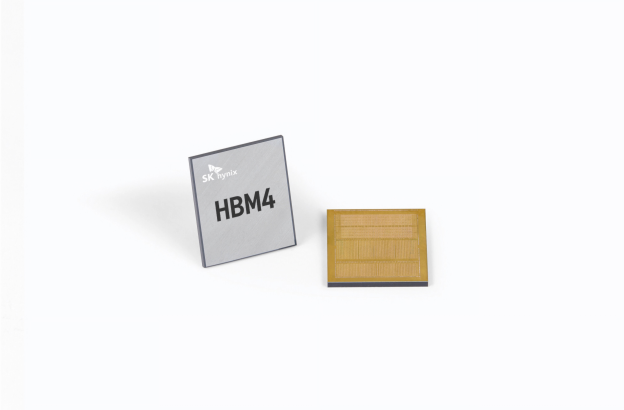
As NVIDIA and cloud giants like Meta and Google ramp up AI efforts, fueling HBM demand, analysts warn of a possible price dip next year. Citing Goldman Sachs, Economic Daily News reports that rising competition and oversupply could trigger the first HBM price drop in 2026—posing a challenge for market leader SK hynix.
Notably, according to Goldman Sachs, HBM prices could see a double-digit drop in 2026. Adding to the pressure, intensifying competition and a shift in pricing power toward major customers—where SK hynix is heavily exposed—could squeeze the company’s margins, Goldman Sachs warns.
The downward HBM pricing trend, as per Goldman Sachs, could be attributed to a significant increase in HBM bit supply from major players, with supply projected to outpace demand, likely pushing average selling prices (ASP) down for the year. After years of tight supply, the HBM market is set to loosen in 2026, which could lead to increased pricing pressure across the industry, Goldman Sachs says.
In the meantime, Goldman Sachs also projects a sharp slowdown in HBM growth—now expected at 25% year-over-year, compared to 45% previously. Goldman Sachs has revised its HBM total addressable market (TAM) estimates, raising 2025 forecast slightly by 1% to US$36 billion, but cutting 2026 outlook by 13% to US$45 billion (previously US$51 billion).
TrendForce observes that with current HBM production improving as yield rates steadily rise across suppliers, price cuts on mature products seem likely. However, the focus next year will be on HBM4, which is still undergoing qualification —making it too early to call the competitive winners. Considering the release of next-gen HBM, overall average HBM prices are still expected to trend upward, according to TrendForce.
Additional Threats on SK hynix’s Horizon
Notably, Goldman Sachs highlights that NVIDIA’s next-gen GPU, Rubin, won’t boost its HBM content compared to B300. Both will use 288GB—Rubin with HBM4 12Hi, B300 with HBM3E 12Hi. This suggests only modest GPU-driven HBM demand growth, which isn’t great news for SK hynix, NVIDIA’s main HBM supplier.
On the flip side, the Economic Daily News, quoting Korean analysts, also warns that SK hynix’s market share might shrink when next-gen HBM4 ships in 2025. In addition, while the U.S. lifting export restrictions on NVIDIA’s H20 chips to China should boost HBM demand—and help SK hynix—it could also give a lift to its rival, the report notes.
Analysts cited by the report caution that by 2026, Samsung’s HBM shipments could grow by 20% annually, a surge that may directly pressure SK hynix’s profit margins.
Economic Daily News also brings up concerns that emerging Chinese memory firms are rapidly closing the gap with global leaders—now just 3 to 4 years behind in technology—and aims to begin mass production of HBM3 by the end of 2026. Though Chinese HBM products may be barred from overseas markets, its domestic expansion could erode SK hynix’s foothold in China, the report notes.
Read more
- [News] SK hynix Reportedly Raises DDR4/ LPDDR4X Contract Prices by 20% as Q3 Demand Stays Strong
- [News] Intel Reportedly Taps SK hynix’s Next-Gen HBM to Power Jaguar Shores in AI Chip Race
(Photo credit: SK hynix)