Popular Keywords



About TrendForce News
TrendForce News operates independently from our research team, curating key semiconductor and tech updates to support timely, informed decisions.
[News] Is the GaN Foundry Model Facing Trouble? China’s Innoscience Weighs In as TSMC Plans 2027 Exit
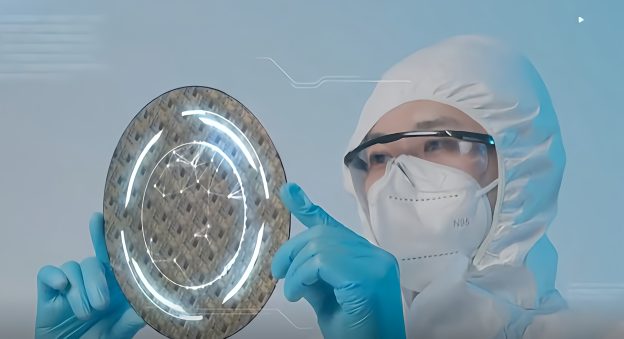
While TSMC plans to exit the gallium nitride (GaN) wafer foundry business by 2027, industry heavyweight Infineon is ramping up its efforts—signaling a notable shift within the GaN sector. What factors might be driving these diverging strategies? According to a report from STAR Market Daily, Board Chair of China’s Innoscience, Weiwei Luo, explains that GaN wafer production may not be well-suited to the traditional foundry model.
Why GaN Doesn’t Fit the Foundry Model
As cited in the report, Luo explains that traditional power semiconductor device structures are relatively simple and do not create strong demand for foundry services. For GaN power devices, in particular, this model does not offer sufficient return on investment (ROI) and lacks the close collaboration typically seen between foundries and their customers.
According to Luo, GaN devices require deep integration between design and application. As such, the IDM model, which vertically integrates manufacturing and connects directly to the market, is currently a more suitable production approach.
Innoscience is the world’s first company to achieve mass production of 8-inch silicon-based GaN wafers and remains the only company globally offering a full voltage spectrum of silicon-based GaN products at industrial scale. The company operates under an IDM model. As of the end of 2024, its monthly GaN wafer production capacity had reached 13,000 wafers, with a yield rate exceeding 95%, according to the report.
Production Challenges: From 6-Inch to 12-Inch
As highlighted in the report, Innoscience CEO notes that 6-inch GaN foundry lines can hardly meet customers’ design integration needs, making major manufacturers unlikely to invest heavily in such capacity. The report adds that viable commercialization requires scaling to 8-inch wafers with meaningful output levels.
Meanwhile, the report, citing industry sources, notes that significant barriers continue to hinder the industrialization of 12-inch GaN wafers. One key challenge, according to Luo, is that no MOCVD equipment supplier has publicly introduced a solution capable of supporting 12-inch GaN epitaxy.
MOCVD is the core equipment for the epitaxial growth of GaN layers. As noted in the report, it plays a vital role in GaN material growth, device performance, and the feasibility of mass production.
According to TrendForce, the global GaN power device market is projected to reach USD 4.376 billion by 2030, representing a compound annual growth rate (CAGR) of 49%.
Read more
- [News] Infineon Accelerates GaN Push While TSMC Exits, with 300mm Wafer Samples Expected 4Q25
- TrendForce’s Analysis Report on the 2024 Global GaN Power Device Market
(Photo credit: Innoscience)
Please note that this article cites information from STAR Market Daily and Infineon.