Popular Keywords



About TrendForce News
TrendForce News operates independently from our research team, curating key semiconductor and tech updates to support timely, informed decisions.
[News] Chipmaking Giant ASML Reportedly Joins Call to Postpone EU AI Rules by Two Years
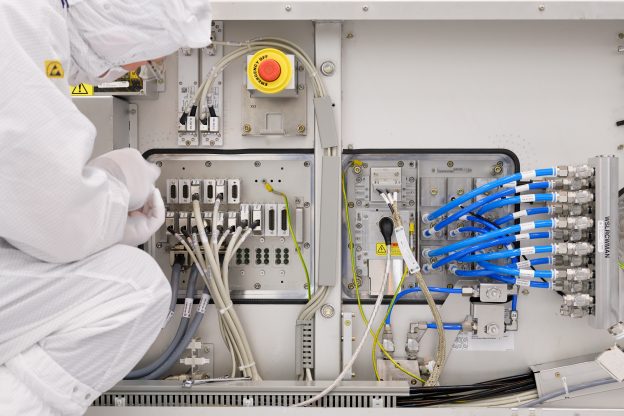
With key parts of the EU’s landmark AI Act set to take effect as early as August, over 40 European CEOs—including chipmaking tool giant ASML and big techs Philips and Siemens—are calling for a two-year delay, warning that rushing the rollout could hurt Europe’s global competitiveness and stall its AI ambitions, according to Bloomberg and euro news.
Reuters reports that the Code of Practice for large language models like OpenAI’s ChatGPT and similar tools from Google and Mistral was initially planned for May 2. Now, the European Commission is reportedly set to release it in the coming days, with companies expected to begin signing next month. The guidelines are likely to take effect by year’s end, the report adds.
Notably, although ASML isn’t directly involved in AI, it plays a crucial role in the AI boom by supplying advanced chipmaking tools—like EUV and High-NA EUV machines—to foundry titans such as TSMC and Intel. These tools enable the production of powerful AI chips designed by NVIDIA, AMD, and for language model training and inference.
According to a previous report from Bloomberg, the Dutch company is set to gain from the massive investments pouring into AI. For instance, Meta recently announced plans to increase 2025 capex to between $64 billion and $72bn, up from the $60bn to $65bn it previously aimed. Meanwhile, OpenAI, SoftBank, and Oracle revealed a $100 billion joint venture, Stargate, earlier this year to build AI data centers and infrastructure across the U.S.
In addition to big techs in Europe, Alphabet’s Google and Meta have all called for a delay, as per Reuters.
EU’s AI Act: Essential Details and Important Dates
As Bloomberg notes, the AI Act passed last year requires developers to reveal how their models are trained and comply with copyright laws. More advanced systems must meet tougher standards on risk, security, and transparency.
According to euro news, the AI Act, which regulates AI based on risk, came into force in August 2024 and will be fully applied by 2027. The CEOs are specifically calling for a delay to upcoming requirements for high-risk AI systems (set for August 2026) and general-purpose AI models (set for August 2025), the report indicates.
As per Bloomberg, the upcoming Code of Practice for large language models is voluntary but serves as a guide to help companies stay compliant with the AI Act. Those who fail to follow the rules could face steep fines—up to 7% of annual revenue, or 3% for advanced AI developers, the report says.
On the other hand, Reuters explains that the new AI rules for general-purpose models will officially take effect on August 2, but enforcement won’t begin right away. New models introduced after that date will have until mid-2026 to comply, while existing models get a longer grace period—until August 2027—to meet the regulations, as per Reuters.
Read more
- [News] ASML’s High-NA EUV May Play a Smaller Role in Future Chipmaking, Intel Director Reportedly Claims
- [News] TSMC Reported to Skip High-NA EUV for A14, Giving Intel an Advantage
(Photo credit: ASML)