[News] Huawei, Xiaomi Unveil New Foldables on Same Day With LogicFolding Kirin 9050 Pro, 3nm XRING O3
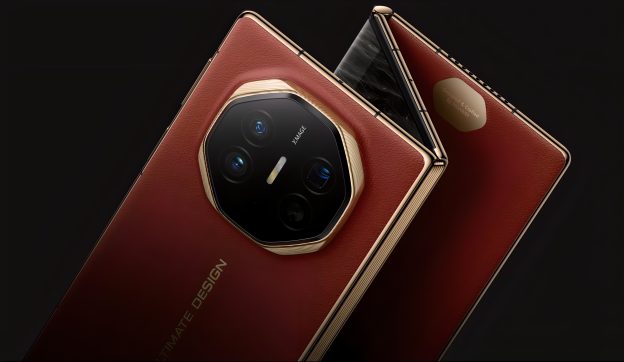
Huawei has introduced a new flagship Kirin chip alongside its latest tri-fold smartphone. According to Mydrivers, Huawei announced the Kirin 9050 Pro on September 7, with the chip making its first appearance in the Mate XT 2. Compared with the Kirin 9020-powered Mate XTs, overall device performance improved by 42%, while single-core performance rose 24% and multi-core concurrent performance increased 52%. The report notes that the Kirin 9050 Pro is also Huawei’s first smartphone chip based on its Tau Scaling Law. Using LogicFolding, the design stacks logic units across layers and connects them vertically, shortening signal paths to reduce latency and improve performance.
The Kirin 9050 Pro features a nine-core CPU with one super core, two performance cores, four efficiency cores, and two small cores. Its GPU supports hardware-accelerated ray tracing and delivers a 142% increase in rendering performance, while the NPU supports what Huawei calls the industry’s first on-device multimodal MoE model with 30 billion total parameters.
Mate XT 2 Adds New Tri-Fold Design and Hardware-Level Privacy
Beyond the new chip, Huawei also put the spotlight on the Mate XT 2 itself. As noted in another report from Mydrivers, the tri-fold flagship introduces a new wing-style design, fitting both inner and outer displays into a body as thin as 3.5mm. Fully unfolded, it offers a 10.2-inch 3K display, which Huawei says is the industry’s largest foldable screen. Despite adding an outer display, the device remains the industry’s thinnest foldable smartphone, according to the report.
The Mate XT 2 also introduces hardware-level privacy protection. Instead of relying on a privacy screen protector, its display integrates two sets of light-emitting units within each pixel area, allowing the viewing angle to change when privacy mode is activated. The screen remains clear when viewed from the front but appears black from wide side angles.
As noted by ITHome, the Mate XT 2 starts at RMB 19,999 for the 16GB+256GB model, rising to RMB 21,999 for 512GB and RMB 23,999 for 1TB. A 1TB version with Huawei’s privacy display is priced at RMB 24,999.
Xiaomi 18 Fold to Feature In-House XRING O3
On the same day, Xiaomi announced its fall flagship launch, with the Xiaomi 18 Fold set to take center stage. According to EE Times China, the foldable will be the first device powered by Xiaomi’s in-house XRING O3 chip, built on a 3nm process. The XRING O3 features a 10-core CPU with six super cores and four large cores, reaching clock speeds of up to 4.35GHz. Its new 16-core G2-Ultra NX GPU delivers 85% higher graphics performance while cutting power consumption by 64%, the report notes. Notably, the chip natively supports CXMT LPDDR6, with bandwidth of up to 113.8GB/s and memory-access latency as low as 82ns.
As for pricing for Xiaomi 18 Fold, according to National Business Daily, Xiaomi President Lu Weibing said that the Xiaomi 18 Fold will start at more than RMB 10,000, citing sharply rising memory and flagship processor costs.
The launches come as competition in foldable smartphones is set to intensify, with Apple also expected to enter the market with its first foldable iPhone. TrendForce estimates that foldables will account for around 2% of the global smartphone market in 2026.
Read more
- Memory Costs Drive Up iPhone 18 Series BOM; AI and Pricing to Shape Upgrade Demand, Says TrendForce
- [News] Xiaomi XRING O3 Reportedly Features CXMT LPDDR6, TSMC 3nm, May Expand TSMC Ties to AI and Auto Chips
(Photo credit: Huawei)