[News] China Reportedly Targets 80% Chip Self-Sufficiency by 2030, Eyes Domestic 7nm Line and 14nm Production Stability
China’s chip self-sufficiency is accelerating. According to Nikkei, the country’s semiconductor industry aims to reach 80% self-sufficiency by 2030, a target set by 13 leading company executives. The push is further reflected as domestic chip equipment makers showcase their latest developments at Semicon China.
As the report highlights, AMEC unveiled equipment for logic chips at the 5nm node and below. Chairman Gerald Yin said the company plans to increase the share of high performance products it can supply in house to over 60% within five to ten years through continued technological development and acquisitions.
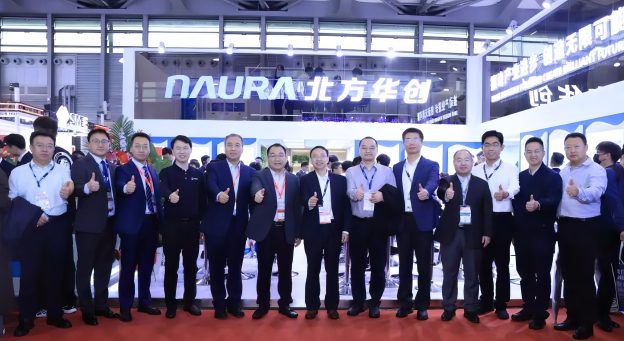
The report adds that Naura, the country’s largest chip equipment maker, also participated in the event, showcasing an expanded product lineup following its 2025 investment in Kingsemi. The company also introduced new products incorporating nanometer level technologies.
Alongside these equipment advances, advanced packaging was highlighted as a key factor that could help the country further strengthen its chipmaking capabilities despite U.S. export controls, as noted by South China Morning Post.
As highlighted by the South China Morning Post, Zheng Li, CEO of JCET Group, said the industry is undergoing a leap in chip packaging technologies, with next generation “atomic level packaging” targeting surface roughness below 0.2nm, compared with around 5nm in current 2.5D packaging. He added that the focus is shifting from increasing transistor density to improving chip quality, with advanced packaging set to become a key driver in the post Moore’s Law era.
China Sets Ambitious Chip Goals, but Technology Gaps Remain
Against this backdrop, the Chinese government has identified semiconductors as a strategic priority in its 2026 to 2030 five year plan. In response, 13 industry executives have proposed a five year roadmap to advance the sector. As Nikkei notes, beyond targeting 80% self sufficiency, the plan also calls for building and testing production lines using fully domestically developed equipment for 7nm chips, as well as achieving stable production at 14nm. However, it remains uncertain whether these targets can be met. According to Nikkei, citing sources, the country’s chip self sufficiency rate, measured by the share of domestic supply provided by Chinese companies, stood at just 33% in 2024.
Nikkei also notes that Lily Feng, president of SEMI China, said China’s share of global production capacity in mature node chips using established technologies is projected to rise from 25% in 2024 to 42% by 2028.
Still, a notable technology gap remains between Chinese and overseas firms in photolithography and other chipmaking equipment, as Nikkei indicates. The report adds that several international players exhibited at Semicon China, including ASML, Japan’s Tokyo Electron and Canon, while U.S. companies Applied Materials, Lam Research, and KLA also participated as sponsors.
Read more
- [News] Naura Reportedly Unveils Hybrid Bonding Tool at SEMICON China; SiCarrier, Last Year’s Lithography Standout, Misses Show
- [News] “China’s ASML” by 2030? SMIC, Naura and Other Chip Leaders Call for National Effort
(Photo credit: Naura)